SCOTLAND TRAVEL TIPS
This post may contain affiliate / compensated links. For full information, please see my disclaimer here.
Scotland At a Glance
Scotland is one of the best destinations in the world for adventure travel and one of my absolute favourite places! Although becoming increasingly popular with tourists, its endless wild and rugged landscapes make you feel like it’s just you and nature. The Scottish Highlands are world-famous for their tall mountains, mirror-like lochs and plunging valleys shaped long ago by ancient glaciers and volcanic explosions. Here in the depths of winter, you’re treated to some of the clearest night skies in Europe – and if you’re lucky, the Northern Lights.
It’s no secret that Scotland’s landscape is awe-inspiring. Coupled with ancient history, fairytale castles, incredible wildlife, remote islands, whisky distilleries and rich cultural heritage, this country will have you longing to return. After spending a decade travelling around Scotland, I’ve put together this comprehensive travel guide to help you plan your trip. It’s pretty in-depth, so I recommend using the table of contents to jump down to the sections you’re most interested in.
Before you get started, join my private Facebook group and sign up for my newsletter so you don’t miss anything important. They’re free!
- Download How to Plan a Trip to Scotland
- Book a private consultation call to discuss your trip
- Request a custom itinerary tailored to your interests
- Bookmark this page so you can come back to it
👋 Need a hand planning your trip to Scotland? From handy free downloads to custom itineraries and consultation calls, take a look at all the ways I can help you, whatever stage you’re at! Click here to view all my Scotland travel planning resources.
Scotland Travel Tips: Quick Information
Currency: Great British Pound (£). Click here for the latest conversion rates.
Electricity socket: Type G (three prongs in a triangular pattern), like the rest of the UK. Voltage is 230 V. Make sure you pack a universal travel adapter so you can use your electronic gadgets with ease!
Visa requirements: Scotland, like the rest of the UK, is not in the EU. If you’re visiting from places like the EU, EEA, USA, Australia, Canada, New Zealand or Switzerland (about 85 countries, but Irish citizens are exempt), you need a valid passport, and you must apply for an Electronic Travel Authorisation (ETA) in advance of travel. Make sure you do this on the GOV.UK website or app rather than a third-party. It costs £20, and it’s attached to your passport. On an ETA, you can stay for up to 6 months.
Other foreign nationals may need to apply for a Standard Visitor visa. It costs £135 for a stay of up to 6 months and includes the whole of the UK. Click here to see whether or not you need to apply for a Standard Visitor visa or ETA.
Editor’s tip: ETAs should take up to three days to be approved and last for two years or until your passport expires. You must travel on the same passport you applied for your ETA with.
Transportation: It’s pretty easy to get around Scotland – even to the remote islands. If you want to cover a lot of ground, I recommend using a combination of trains and buses. Use Traveline Scotland’s journey planner to help you plan your route. Or check out this timetable here.
Most trains in Scotland are operated by ScotRail. Train tickets are fairly inexpensive in comparison to the rest of the UK, but if you plan to take the train a lot, it’s worth looking at ScotRail’s travel passes. Some of their passes also include buses and ferries in the cost, so make sure you know what’s included. Before making a decision, add up the cost of your transport and compare it with the cost of the pass to see if you make any savings.
You can also travel by CityLink coaches, which connect over 200 towns and cities. These coaches are modern, comfortable and include toilets (hooray!). You can get a CityLink Explorer pass to reduce costs and save you from buying tickets each time. Ember is another great, inexpensive alternative with tickets as low as £2!
For public transport in Scotland, it’s best to book direct rather than using third parties. This includes ScotRail, Ember and Citylink coaches and any ferry you take. The main ferry operators are Caledonian MacBrayne (CalMac) for the West Coast and NorthLink Ferries for Orkney and Shetland.
Small group or self-guided tours, which cover all your transport, are possible too. Alternatively, if you want more flexibility, hire a car or campervan. Use DiscoverCars to compare car rental prices. You can use your existing driver’s license, but there are age limits. Wondering whether to rent a car or use public transport in Scotland? Read my comparison guide here.

Best SIM card: Travel SIM cards with a range of plans can be picked up at airports, supermarkets, online and network companies. All you need is an unlocked phone, and you’re all set. The easiest option is to download an eSIM on your phone. I use Airalo (use code AIRALOESIM10 to get 10% off).
Safety rating: Scotland is ranked 39 out of 163 on the Global Peace Index with a score of 1.73. Although I should hasten to add that it’s the United Kingdom that has that official ranking.
Scotland is a very safe and friendly country. In fact, Rough Guide readers voted it the most welcoming country in the world. A study by Cambridge University found that Scottish people are the most friendly, cooperative and agreeable in the UK! I’ve always felt very safe travelling solo as a woman in Scotland, including when I’m out in nature.
Emergencies & medical: The emergency phone number for fire, police and ambulances is 999. For non-emergency medical concerns, you can call 111. I always recommend buying travel insurance to make sure you’re covered for any eventuality, including theft or cancellations. My go-to is World Nomads.
Culture: Despite being part of the UK, Scotland’s culture is very distinctive and can be traced back thousands of years. You may already be familiar with bagpipes, a well-known symbol of Scottish culture. Kilts with their tartan pattern (traditional Scottish dress) became popular in the 18th century.
Some traditional customs include the ceilidh (pronounced ‘kay-lee’) involving music, dancing and storytelling and the Highland games, a sporting spectacle with music and dancing. Popular festivals are Burns Night (in celebration of the poet Robert Burns), St Andrew’s Day and Hogmanay (New Year’s Eve celebration).
‘Auld Lang Syne,’ written by Robert Burns, is the second most popular song in the world! And what about traditional Scottish food? We’ll cover that later, so don’t worry.
Did you know that Hogmanay was historically a bigger celebration in Scotland than Christmas? In fact, Christmas was once banned following the Protestant Reformation! Take this quiz to see how well you know Scotland’s traditions!
Language: English is the official language of Scotland alongside British Sign Language. A small proportion of the Scottish population also speaks Gaelic. This is particularly found in the Western Isles, the Western Highlands and Glasgow. Scots language is also spoken. It’s sometimes referred to as a dialect. Historically, from Lowland Scotland, it’s directly descended from Northern English.
Time zone: GMT+0
Climate: If you think England is wet, then just wait till you get to Scotland! Yes, it does rain a lot, but don’t let that put you off. As the saying goes, “There’s no such thing as bad weather, just bad clothes!”
All jokes aside, Scotland has a temperate oceanic climate. It has all four seasons with warm (ish) summers and cool winters. Located in the Northern Hemisphere, its winter is from December to February and summer is from June to August. Summer is usually the busiest time and most expensive as there’s a much higher demand for attractions and accommodation. The best things to do in summer make the most of the outdoors, and you can escape the crowds if you head to lesser-known areas.
Winter is the low season (except Christmas and New Year’s Eve). You can make the most of the cheaper rates. However, many attractions close (sometimes up to 6 months at a time) due to the weather conditions. The Highlands, in particular, are usually covered in a blanket of snow and ice from as early as November to February/March. It’s a magical sight and well worth it if you enjoy wintry destinations.
If you want to do everything without restrictions, then I recommend the shoulder seasons because most attractions are open and you don’t have as many crowds. In terms of seasonal variance in Scotland, temperatures don’t differ too much. Winters have an average low of around 0 degrees Celsius, and summers have maximum highs of about 15-17 degrees Celsius.
The weather does change a lot. If you think you’re in for a rainy day, travel to the next region, and you might find some sun! I’ve travelled around Scotland in summer, early autumn and the depths of winter and enjoyed every one of my trips. Take a look at my guide to the best time to visit Scotland to help you plan your trip.

How to Plan Your Scotland Trip
Once you’ve worked out the time of year you want to visit, the next step is to get budgeting and plan your packing list. These next few tips can help:
Budget Tips
While Scotland isn’t the cheapest European country, it’s still possible to stick to a budget and not break the bank. You just have to be a bit savvy about what you want to see and how much you want to spend. Then budget accordingly. The great thing is if you’re a nature lover, you can get away with doing a lot of free activities like hikes, camping and cycling (if you bring your own bike). Most museums in Scotland are free too.
Your two biggest expenses will most likely be transport and accommodation. Hostels are around £20-£50 a night, whereas budget hotels can be around £50-£100 a night depending on the popularity of the location. Car hire costs are about £18-£30 a day, and you’ll also have to factor in a couple of extra pounds (GBP) for parking in some areas.
If you prefer to go by public transport, buses are cheap and can get you to most places. Trains are more expensive, so always make sure you book in advance for the cheapest rates. Here are the budgets I recommend depending on your spending level:
Backpacker: You can get by on about £55-£60 a day if you do mostly free activities, stay in hostels, go wild camping (more on that later), cook your own meals, use local transport and book in advance.
Mid-range: A typical mid-range budget is about £100-£150 a day. That’s with staying at budget hotels or B&Bs, doing a few more paid activities and tours, eating out a couple of times at affordable restaurants and using rentals or public transport.
Luxury: This type of budget is about £200+, and that’s with upmarket hotels, eating out for every meal, plenty of paid attractions and tours, taking lots of trains or using a rental.
Editor’s tip: I spent around £110 a day on a 10-day trip. I stayed at some lovely B&Bs with breakfasts included, took a combination of public transport, did a few slightly more expensive activities here and there and ate at affordable restaurants most nights.
What to Pack for Scotland
Scotland has distinct seasons, and you can sometimes experience all four of them in a day. It’s a good idea to be well-equipped for changeable conditions regardless of the season. A waterproof jacket is a must! I’m a big fan of Lighthouse Clothing’s stylish jackets for men and women. In summer, I like to pack a lightweight Mac in a Sac instead of a bulky jacket. The padded jackets are particularly useful for those blustery days on the Isle of Skye – even in June!
Whether you’re visiting Scotland in summer or winter, I recommend packing clothes that you can layer up or down, like t-shirts, leggings and lightweight fleeces. The key is to have interchangeable capsule outfits so you can travel light. Packing cubes are also a lifesaver for this.
Other key essentials are sunscreen and midge repellent from Smidge. Trust me, you’re going to really need that one if you’re visiting Skye or you’re out in the countryside at dusk! Midges are small biting gnat-like flies. They don’t spread disease to humans, but their bites are irritating, and they can get everywhere. For more tips on what to bring, check out my complete packing list.
Essentials for Scotland

A good pair of walking boots is a must in Scotland. These ones are sturdy, vegan and waterproof. Read my full review here.

Have safe drinking water wherever you go. Use code FB15 to get 15% off. Read my full review here.

I always travel with my trusty Osprey Europe bag. It has plenty of useful compartments. Practical wheeled bags are also available here.
Sustainable Outdoor Travel
Scotland is committed to protecting its breathtaking natural sites. There are about 600 conservation areas and 74 local nature reserves around the country. Scotland is also the home of an ambitious rewilding project. The aim is to turn it into the world’s first Rewilding Nation with 30% of the land and sea returning to their wild, natural state by 2030. Called the Affric Highlands project, it’s the biggest rewilding project in the UK.
And another win for sustainability – Scotland was one of the first countries in the world to sign up to the UN Sustainable Development Goals to achieve a ‘better and more sustainable future for all’ by 2030. You can help them reach their goals by:
- Staying in local sustainable accommodation and campsites.
- Joining responsible tours that give back to the local community.
- Visiting destinations at off-peak times to limit crowds.
- Visiting and supporting reserves and national parks
- Recycling your waste wherever you go.
- Reducing single-use plastic in your packing list.
- Supporting local businesses.
- Following the Leave No Trace principles when out in nature. Take only photos and leave only footprints!
- Joining accredited rewilding and conservation projects to give back.

Best Things to Do in Scotland
As I mentioned before in this travel guide, Scotland is the land of adventure with so much to offer for everyone across its diverse regions. Check out the best things to do and places to visit in Scotland. This is not a definitive list, so be sure to also visit my dedicated pages on the top things to do and places to visit.
Go Hiking in the Highlands
Immerse yourself in the wild beauty and romance of the Scottish Highlands by hiking. Head to Fort William, the outdoor capital of the UK. Glen Righ and Inchree Falls are another easy walk with stunning views over Loch Linnhe.
More experienced hikers might want to do the Great Glen Way or the Cairngorm mountain range. And the best bit? Hiking in Scotland is free. Make sure you stay safe and check the weather in advance. Here’s my guide to the best day hikes in Scotland!
Ride the Jacobite Steam Train
Perhaps most recognisable as the Hogwarts Express in Harry Potter, watching or riding this iconic train is one of the best things to do in Scotland. Go to Glenfinnan Viaduct for extraordinary views of the steam train overlooking Glenfinnan Monument and the waters of Loch Shiel.
Alternatively, you can ride the train on what’s dubbed one of the greatest railway journeys in the world. A ticket gets you a return from Fort William to Mallaig starting from £76 per person. Read my review of the experience here!
Explore the Isle of Skye
Skye is the largest island in the Inner Hebrides. Its rugged landscapes, medieval castles, pretty fishing villages and striking geological formations make it a popular destination to visit.
Top places include the Old Man of Storr, Quiraing, Fairy Glen, Fairy Pools and the villages of Dunvegan and Portree. You’ll need a vehicle if you want to cover a lot of ground. You can also hire electric bikes and cycle the Trotternish Peninsula. Alternatively, take a look at some of the most popular tours of Skye below.
Go Island-Hopping in the Inner and Outer Hebrides
Visit Mull and its beautiful fishing village of Tobermory. Go to Islay for Scotch whisky and Iona for the birthplace of Christianity in Scotland. Visit Eigg, the world’s first community with an off-grid electric system. This tour is an easy way to see Mull and Iona!
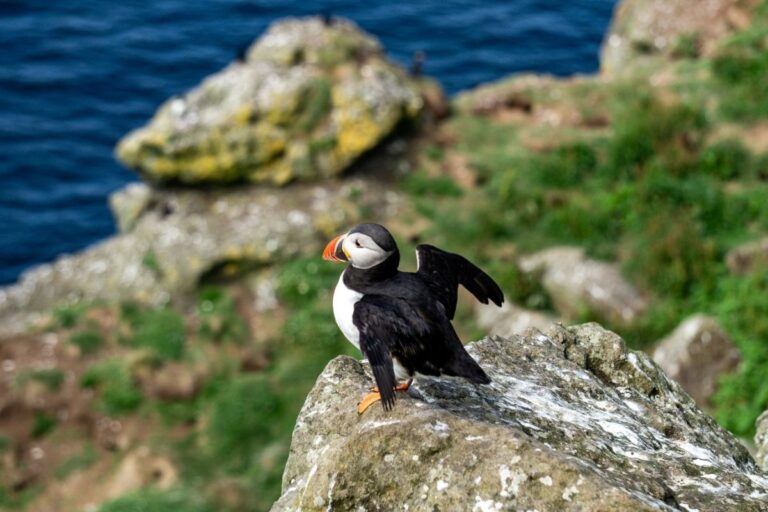
In the Outer Hebrides, head to Lewis for 5000 year old megaliths, Harris for beaches that rival the Caribbean and St Kilda for incredible wildlife such as whales, sharks and puffins! Discover what to do on the Isle of Mull here!
Travel Around the Orkney Isles
Don’t just leave your island-hopping to the Hebrides. The Orkney Isles on Scotland’s northeastern coast are a must if you love ancient history and rugged scenery.
Visit the Neolithic town of Skara Brae and the Standing Stones of Stenness, enjoy coastal walks with dramatic cliff views, and see other UNESCO World Heritage sites such as the Rings of Brodgar and the Maeshowe chambered tomb. If you’re lucky, you might even see the Northern Lights! By the way, if you book any tours directly with Rabbie’s Tours, use code LLT15 to get 15% off!
Visit Edinburgh
Edinburgh is the capital of Scotland. Located on the east coast, the hilly city is full of fascinating history and culture. There are plenty of things to do.
Explore the medieval Old Town with its Royal Mile up the hill to Edinburgh Castle; wander through the Georgian New Town full of gardens and neoclassical buildings; head to the volcanic Arthur’s Seat for panoramic views and visit the picturesque Dean Village. Edinburgh is also a great base for exploring the Scottish Borders and the east coast. Check out my favourite day trips to do.

Join a Rewilding Project
You can help turn Scotland into a Rewilding Nation by doing a rewilding holiday. One of the best ones is Trees for Life, an award-winning Scottish charity dedicated to restoring the Caledonian Forest. You can join one of its Conservation Weeks as a volunteer.
Alladale Wilderness Reserve is another great option, and your stay in this beautiful location directly funds conservation projects. Alternatively, you can learn about the benefits of rewilding and see projects in action at SCOTLAND: The Big Picture in the Cairngorms. If you want a memento of your contribution, you can become a Lord, Laird or Lady of a piece of land and visit it through Highland Titles.
Ride the West Highland Line
Enjoy a cinematic train journey along the West Highland Line from Glasgow to Fort William. Or go even further, across the Glenfinnan Viaduct to Mallaig.
Look out for highlights including the rocky pinnacle of Cobbler as you approach Arrochar, the dramatic Horseshoe Curve, Rannoch Moor and Carrour, the UK’s highest-altitude train station. The final leg to Mallaig gives you views out towards Skye in the distance. It’s not the only scenic railway in Scotland, though!
Go Camping in the National Parks
Scotland has a ‘right to roam’ policy which means everyone is entitled to access most land and inland water for recreational and other purposes as long as they’re respectful. Activities you’re allowed to do include camping.
A great way to stick to a budget and immerse yourself in the Highlands is to go wild camping in one of Scotland’s two national parks (the Cairngorms and Loch Lomond & the Trossachs). It’s completely free to do, but take everything you bring away with you and leave the site exactly as you found it. Some areas have camping byelaws, so make sure you’re up-to-date with those before you set off.
Look for “Nessie” in Loch Ness
One of Scotland’s biggest mysteries is the monster of Loch Ness, or “Nessie” as it’s otherwise called. Reports of a monster in Loch Ness date back to ancient Pictish carvings and a written account from 565 AD. Alleged monster sightings grew in the 1930s, but no monster has ever been found. Whether or not you believe in the legend of the Loch Ness monster, you can still take a cruise across the water and learn about this beguiling mystery.
Visit Glasgow
Known as the cultural capital of Scotland, Glasgow is a port city on the River Clyde. Here, you’ll find the Scottish Opera, Scottish Ballet, National Theatre of Scotland, a thriving music scene, plenty of museums and striking art nouveau architecture. Glasgow is another great base for exploring the west coast and central parts of Scotland. Read about my favourite day trips by public transport.
Explore Castle Galore
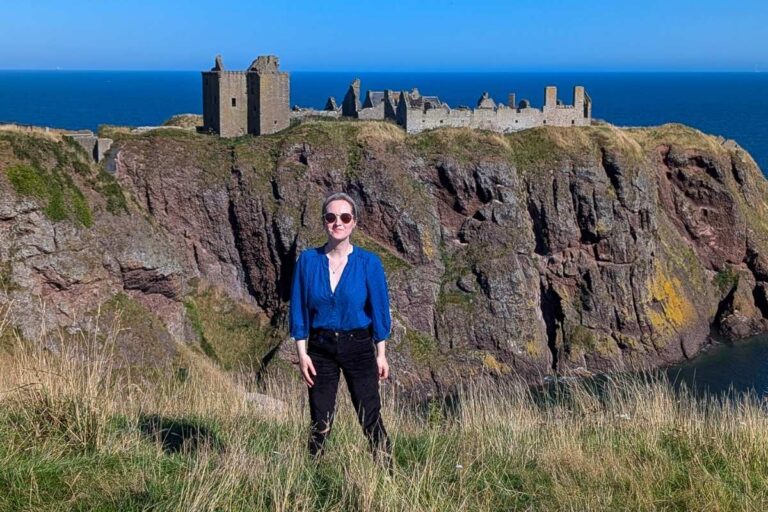
Scotland is known for its castles. Perhaps the most famous one is Edinburgh Castle, which overlooks the city – but you don’t need to stop there. Some of the best castles to look out for on your trip are:
- Eilean Donan Castle on your way to Skye
- Kilchurn Castle on the shores of Loch Awe
- Blackness Castle, used in Outlander and Game of Thrones
- Stirling Castle, one of the most important castles in Scotland
- The beautiful pink Craigievar Castle, said to be the inspiration for Walt Disney’s Cinderella Castle
- Balmoral Castle, the Scottish residence of the Queen
- The whitewashed Blair Castle
- The haunted Castle Fraser
- Dunrobin Castle, which looks like it’s from a fairytale
- Lochranza Castle on the Isle of Arran, dubbed ‘Scotland in Miniature’
- The atmospheric Gylen Castle on Kerrera, off the coast of Oban

Marvel at Ben Nevis
Ben Nevis is the tallest peak in the UK, with Fort William at its base. On a clear day, you can admire its size or go hiking around the stunning area of Glencoe where it’s located. You can also hike to the top following the Ben Nevis Mountain Path. It’s a 9.8-mile hike out and back and is rated as difficult.
Do the Caledonian Sleeper
If you’re travelling from England to Scotland, opt to do the Caledonian Sleeper one way at least instead of flying. Departing from London, the sleeper train carries you up to Scotland through the night while you dream. I recommend getting the train up to Fort William as you wake up to glorious views of the Highlands rolling past. Read my review of the Caledonian Sleeper.
Visit Culloden Battlefield
In 1746, the Jacobite Rising (the plot to restore the Stuart monarchy to the British throne) came to a bloody head on Culloden Moor. The battle lasted less than an hour, and 1500 Jacobites were killed. Today, the site of the battle is home to a visitor centre and museum where you can discover the story of the Jacobites, read letters from Prince Charles Edward Stuart and learn about the clans remembered there. View the Culloden Battlefield tour with Rabbie’s here and get 15% off with code LLT15.
Do a Wildlife Tour
Hands down, one of the highlights of my trip was doing a wildlife tour from Mull to Staffa and Fingal’s Cave. The half-day boat trip departs from Tobermory and treats you to gorgeous views of the Inner Hebrides. Plus, we saw dolphins, seals, gannets and rare feeding minke whales! Both Staffa Tours and Turus Mara offer boat tours of the Treshnish Isles from Oban and Mull.
Explore the Cairngorms National Park
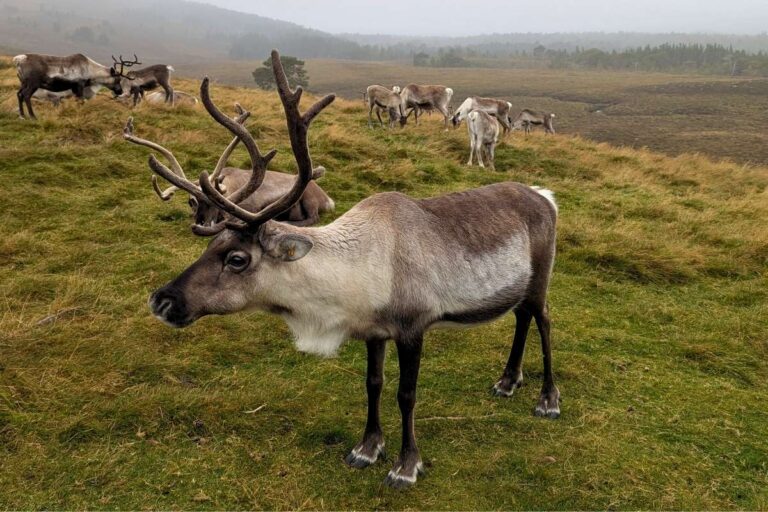
Discover where the UK’s only free-roaming reindeer herd hang out, hike up the second-highest mountain in the country and see ancient castle ruins in the Cairngorms National Park. Stay in the heart of the Highlands, Aviemore, and explore the local area.
Experience the Beauty of Glencoe
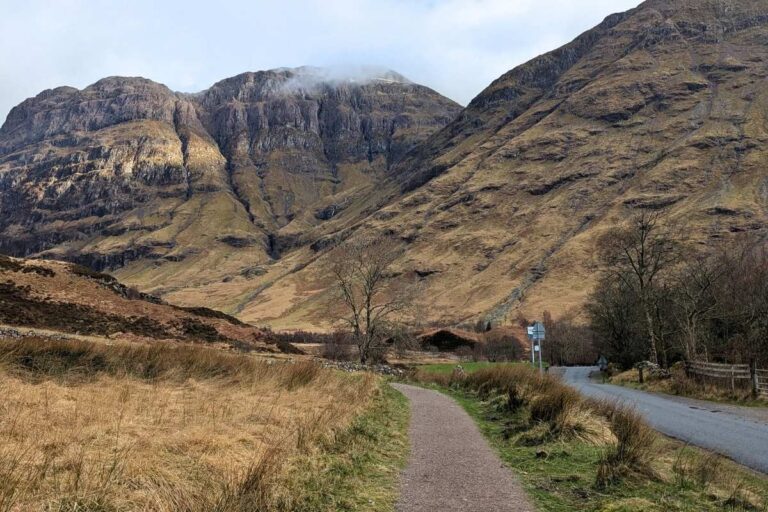
Glencoe’s landscape looks like it’s straight out of a fairytale. This ethereal glen is located in the Highlands of Western Scotland. The glen was once formed by an ancient Ice Age glacier, and it has steep mountains rising up on either side of it. It’s also the site of the bloody Massacre of Glencoe in 1692.
A landscape of waterfalls, gullies and towering peaks, you’ll find some of the most photographed places in Scotland here, including Buachaille Etive Mor, the Three Sisters and Achnambeithach Cottage. Have a drink at the 300-year-old Clachaig Inn, see the 17th-century replica of a traditional turf house at the Visitor Centre and meet the red deer at Kinghouse Hotel. If you don’t fancy driving, take a look at the best-rated Glencoe tours below.
Don’t Miss the Scottish Borders
It’s easy to forget about the Scottish-English border – don’t! The Scottish Borders are known for world-famous designer knitwear. The town of Hawick, in particular, is the epicentre of the Scottish textile industry, with designer mills such as Johnstons of Elgin, Hawico, Lovat Mill and William Lockie located here. It’s the perfect place to grab some discounted designer cashmere! Read my quick guide here.
Explore the Fishing Villages of Fife
Scotland’s west coast gets a lot of attention, but don’t overlook the east coast and the Fife peninsula. Explore pretty fishing villages including Anstruther, Crail and Pittenweem. Head up to St Andrews, the birthplace of golf. Don’t miss Falkland, home to the fairytale Falkland Palace and Gardens. I recommend seeing the best of Fife on a small-group day tour with Rabbie’s here. Remember, use code LLT15 to get 15% off!
Do a Tour of Scotland
Travelling with a small-group tour or a self-guided tour is one of the easiest ways to get around. All accommodation and transport are sorted. There are a lot of small-group tours in Scotland. I’ve rounded up nine of the best to help you choose. Each one is based on my own experiences, reviews, sustainability and of course, itinerary. View them here or check out a few of my favourites:
- Rabbie’s Tours – award-winning one-day and multi-day small-group tours (use code LLT15 for 15% off when you book direct)
- Highland Explorer Tours – award-winning one-day and multi-day small-group tours led by local guides (use code FRANCESCA10 for 10% off day trips, excluding the Jacobite train and Highland Games)
- Byway Travel – self-guided, bespoke itineraries using trains and public transport
- Timberbush Tours – award-winning small-group tours from Edinburgh, Glasgow and Inverness
- The Hairy Coo – one-day and multi-day coach tours from Edinburgh and Inverness
- SCOTLAND: The Big Picture – nature and rewilding-focused multi-day tours in the Scottish Highlands

Scotland Travel Guide: what to eat
Here’s a quick overview of what to eat in Scotland, including some top staples and specialities:
Haggis: You can’t think of Scottish food without haggis! The national dish is a savoury pudding typically consisting of the liver, heart, and lungs of a sheep, minced and mixed with beef suet, oats, spices and seasoning. Then it’s stuffed into a sheep’s stomach and boiled. The result tastes like a crumbly sausage. Not ideal for vegans and vegetarians… although there are meat-free versions around!
Neeps and tatties: Typically served up with haggis on a traditional Scottish plate, neeps are mashed swede or turnips, and tatties are mashed potatoes. Haggis, neeps and tatties are often eaten on Burns Night in celebration of the Scottish poet, Robert Burns.
Porridge: Scottish porridge has been a staple part of the diet for centuries. Oats have been grown in Scotland since the late medieval times as they’re both compatible with the environment and a nutritious and filling food source. Originally made with oats, water and salt, porridge has evolved to become a sweet and creamy breakfast dish.
Scotch whisky: This national drink has been distilled in Scotland since 1494. There are now over 130 malt and grain distilleries around the country. Many are open to the public, giving you the chance to try a dram or two on a tour or tasting. A great example is Nc’Nean, a sustainable Scotch whisky distillery.
Cullen skink: One of Scotland’s most famous dishes is Cullen skink. It’s a hearty soup traditionally made with smoked haddock, potatoes, onions and milk. It’s a local speciality from the town of Cullen on the northeast coast of Scotland.
Seafood: Scottish seafood deserves a mention here as it’s honestly some of the best in the world – particularly along the west coast. If you like your fish, head to Oban, the seafood capital of Scotland!
Dining in Scotland
One of the easiest ways to save money while travelling in Scotland is to buy food from the supermarket and cook at your accommodation. Most hostels, campgrounds and private rentals have kitchens. Top supermarkets to look out for are Tesco, Sainsbury’s, ASDA, Aldi, Lidl and Co-op.
Editor’s tip: pack a cold food bag to help perishable food last longer when you’re travelling around. This one is so useful!
Restaurants, Cafes and Bars
Dining out in Scotland is relatively expensive, depending on where you go and how popular the location is. Sit-down meals can be around £15-£25 per person, not including drinks. A pint of local beer can cost around £4.48.
You can keep the costs of eating out low if you’re clever about it. You can get a large portion of fish ‘n’ chips for £10 or a takeaway pizza for around £7. That’s exactly what we did on Skye, where restaurant prices are particularly high.
Editor’s tip: Hands down, my favourite restaurant in Edinburgh is Chez Jules. This cheerful French restaurant has the most amazing weekday lunchtime deal – 3 courses for under £20! The food is delicious too.

Where to Stay in Scotland
Scotland’s accommodation varies greatly. From hostels to camping, glamping to Airbnbs, holiday rentals, hotels, B&Bs and ecolodges, there’s something to suit every travel style, preference and budget.
I’m a big fan of the cosy B&B, particularly if you’re staying somewhere remote. I’ve stayed in lovely rooms and met welcoming hosts who go out of their way to make sure my stay is comfortable. Plus, nothing beats a hearty breakfast in the morning.
I use Booking.com to help me find the best places to stay in Scotland. Whatever you do, always read reviews before booking your accommodation. Check out these accommodation guides below and get inspired for your trip:
- Where to Stay in Edinburgh for First-Time Visitors
- Where to Stay in Inverness, Scotland: The Best Affordable Hotels
- Where to Stay in Glasgow: Best Areas for 2026
- 15 Most Unique Eco-Friendly Getaways In Scotland
- Hotel Review: Schloss Roxburghe, The Scottish Borders
- Mull Accommodation: 11 Best Places To Stay on Mull
- 15 Best Places to Stay on the Isle Of Skye For Every Budget
Download My Free Scotland Packing List
Posts About Scotland
-
I Visited the Puffins of Lunga: Here’s What It’s Like
The Treshnish Isles had been on my mind ever since my visit back in September 2021. As we cruised by them on our way to Staffa, our skipper…
-
I Did a Cairngorm Reindeer Hill Trip: Here’s What It’s Like
They came trotting across the tussock-spotted field. The younger ones, with their stubby antlers, boldly led the way, while the older members of the herd brought up the…
-
Glencoe Without a Car: How to Visit & What to Do
Can you see Glencoe without a car? As a car-free traveller, Glencoe had always been on my wishlist, but it seemed tricky to do without driving. I decided…
-
Glamping in Glencoe: Staying in Scotland’s Majestic Glen
Glencoe is on many Scottish bucket lists, but most people just drive through it in a couple of hours on their way up or down through the Highlands….
-
The Isle of Kerrera: An Easy Car-Free Day Trip from Oban
As a car-free traveller, navigating Scotland’s islands without a vehicle is usually tricky, so when I learned that Kerrera was car-free for visitors, I knew I had to…
-
10 Easy Day Trips from Inverness Without a Car
I always end up staying a few days in Inverness when I’m exploring Scotland, not just because of its lively music scene and peaceful riverside setting. As the…
-
Things to Do in North Berwick: Edinburgh’s Perfect Day Trip
North Berwick had been haunting my trip to Edinburgh ever since I spied Bass Rock protruding from the distant coastline on my ascent of Arthur’s Seat. Gleaming silvery-grey…
-
10 Things to Do in Luss: Loch Lomond’s Prettiest Village
Luss is hailed as one of Scotland’s prettiest villages, and you soon see why when you arrive. Tucked on Loch Lomond’s western shore, it’s a protected conservation village,…
-
13 Common Scotland Itinerary Mistakes & How to Avoid Them
Planning a trip to Scotland is equal parts exciting and overwhelming, particularly if it’s your first time. There’s so much to think about and organise. In my private…