
I Visited the Puffins of Lunga: Here’s What It’s Like
This post may contain affiliate / compensated links. As an Amazon Associate, I also earn from qualifying purchases at no extra cost to you. For full information, please see my disclaimer here. Thank you!
The Treshnish Isles had been on my mind ever since my visit back in September 2021. As we cruised by them on our way to Staffa, our skipper explained they were home to puffins in spring and summer, but they were long gone by the time I got there.
After that, seeing puffins in Scotland was number one on my bucket list, so I planned a summer trip to the Isle of May a few years later. It wasn’t to be. High winds in the North Sea meant my boat was cancelled. After a frantic, last-minute search, I came across a boat trip to Lunga in the Treshnish Isles with Turus Mara. Luckily, there was still some availability, and it felt like a sign.
Fast-forward to a bright June day, and I was standing on the tiny island, surrounded by a colony of around 13,000 puffins. It was a dream come true. In this guide, I share how to see the puffins of Lunga in the Treshnish Isles, including the best time to visit and how to get there even if you’re not driving.
Where is the Isle of Lunga?

Lunga is the largest of the Treshnish Isles, an archipelago of 8 tiny islands and skerries off the west coast of Mull in the Inner Hebrides.
Managed by the National Trust for Scotland, the islands are uninhabited by humans, but they’re an important home for ground-nesting birds, including corncrakes, Storm petrels and, of course, Atlantic puffins.
An estimated 13,000 breeding puffins nest on Lunga each year. With regular boat tours throughout summer departing from the Isle of Mull, this island is one of the most accessible places in Scotland to see such a high number of puffins. The Isle of May in the Firth of Forth takes the top spot with around 73,000, although they’re in decline.
Boat trips to Lunga are often paired with a visit to the Isle of Staffa, famed for its striking basalt sea cave that has inspired composers, poets and writers for centuries. This lone uninhabited island off Mull’s coast is also home to a small puffin colony.
How do you get to Lunga?

The only way to visit Lunga is with a boat tour operator. You can’t get there on your own. Both Staffa Tours and Turus Mara offer wildlife boat trips where Lunga is included in the itinerary. These include:
Staffa Tours:
Turus Mara:
- Treshnish Isles and Staffa Wildlife Tour from Oban or Mull
- Treshnish Isles Photography Special
- Big Bird Trip from Mull
These Treshnish Isles cruises depart from the Isle of Mull, but they both have options with transfers from Oban on the mainland. The town is easily accessible by public transport, making it a handy base if you’re exploring the west coast without a car.
In collaboration with West Coast Tours, Staffa Tours’ Wildlife Tour from Oban includes a return journey on the Caledonian MacBrayne ferry to Craignure and a bus to Fionnphort, where the boat takes you to Iona, Staffa and Lunga.
With Turus Mara, you book your return ferry tickets to Craignure separately, and a minibus picks you up and drives you to Ulva Ferry, where the boat departs. At the end of your trip, you’re taken back to Craignure in time for the ferry to Oban.
Tours by both operators last the full day, and you get to spend about 2 hours on Lunga with the puffins (longer if you book Turus Mara’s big bird or photography tours!).
Whether you choose Staffa Tours or Turus Mara, I strongly recommend booking your tour about a month or two in advance if possible. I booked my Turus Mara tour 10 days in advance for a June trip, but I put it down to luck. Staffa Tours was already sold out!
My puffin-watching experience

Setting off from the tiny Ulva Ferry Port on Mull, our first stop was Staffa, where my mission to see the puffins began all those years ago. As we sped across the glass-still waters, we were accosted by a pod of bottlenose dolphins. They accompanied us for a short way, leaping and diving alongside the boat before swimming off as quickly as they arrived.
Soon we reached Staffa, where we had about 45 minutes to explore the island. I was eager to finally see the puffins, but their clifftop burrow area was suspiciously quiet. No telltale orange beaks to be seen. It turned out that most of them had gone for a midday paddle. I could just make out distant bird-shaped specks on the water below.
Never mind! It was time to cruise to Lunga, the main puffin hotspot of the Treshnish Isles. As we drew closer to the emerald green mass on the horizon, birds skimmed the water and swooped past our boat. Their bright orange beaks and feet were unmistakable. Puffins. At last!
On Lunga, I followed my fellow passengers across the stony shoreline and joined a well-marked trail leading to higher ground where the puffins like to burrow. As I puffed up the hill, I spotted a puffin peering down at me from its perch, eyeing up the newcomers like a sentinel at the city gates.
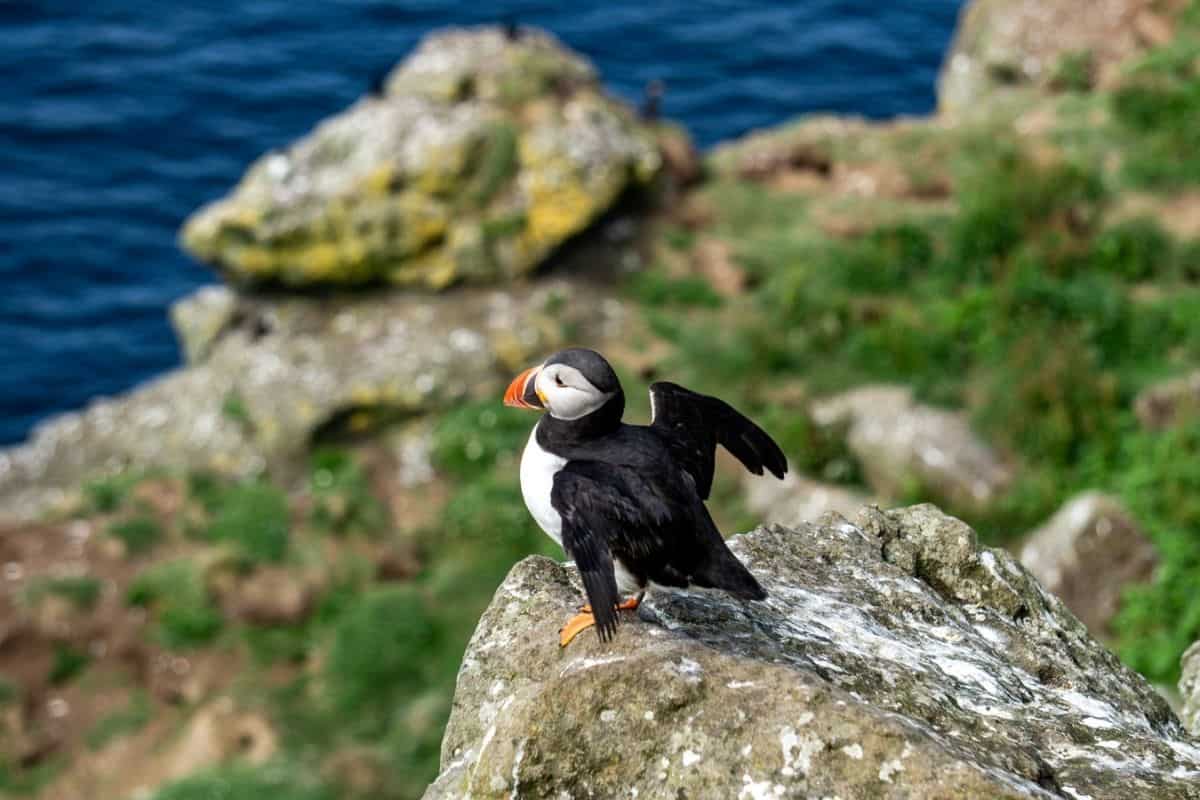
The path opened onto a plateau with a ledge pockmarked with burrows and dozens of puffins preening themselves, tottering along the edge or squabbling with their neighbours. They were completely unfazed by the people gawping and taking photos. A cordon on the ground discouraged you from getting too close to them and the crumbling cliffs beyond.
This was a brilliant introduction to the puffins of Lunga, but I decided to see what else I could find with a mind to escape the crowds. I spotted a path snaking up along the top of the cliffs, winding past rocks and grass-covered slopes.
There, I spent a glorious hour wandering up the path, taking photos and watching all the puffin antics. They were perched everywhere, looking far too precarious on the edge despite their ability to fly. The air was filled with the sound of fluttering wings as they launched themselves towards the sea or returned from the water to their burrows.
Although they didn’t seem to mind my intrusion into their home, I noticed they stared at me as much as I stared at them. So, I found a spot by a collection of burrows and sat still. I was able to see far more of their natural behaviours, including the billing ritual where mates rub their beaks together to reaffirm their bond.
Other wildlife on Lunga
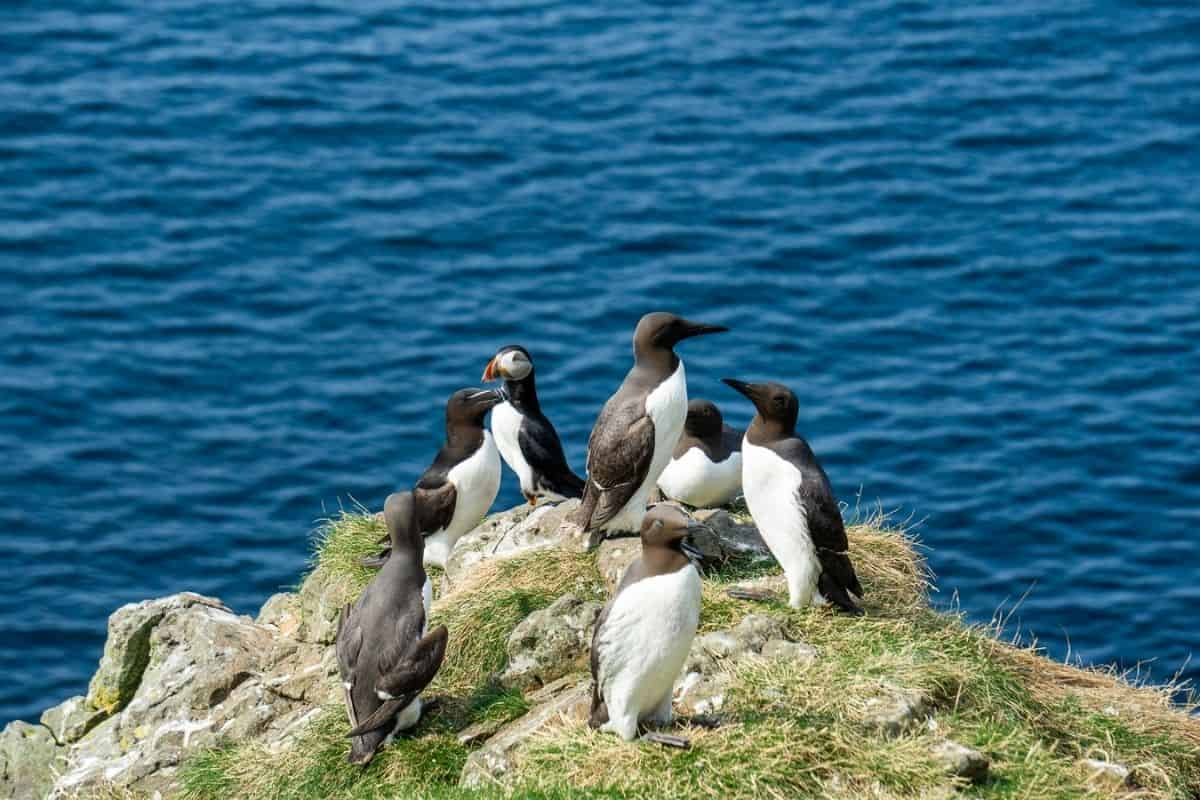
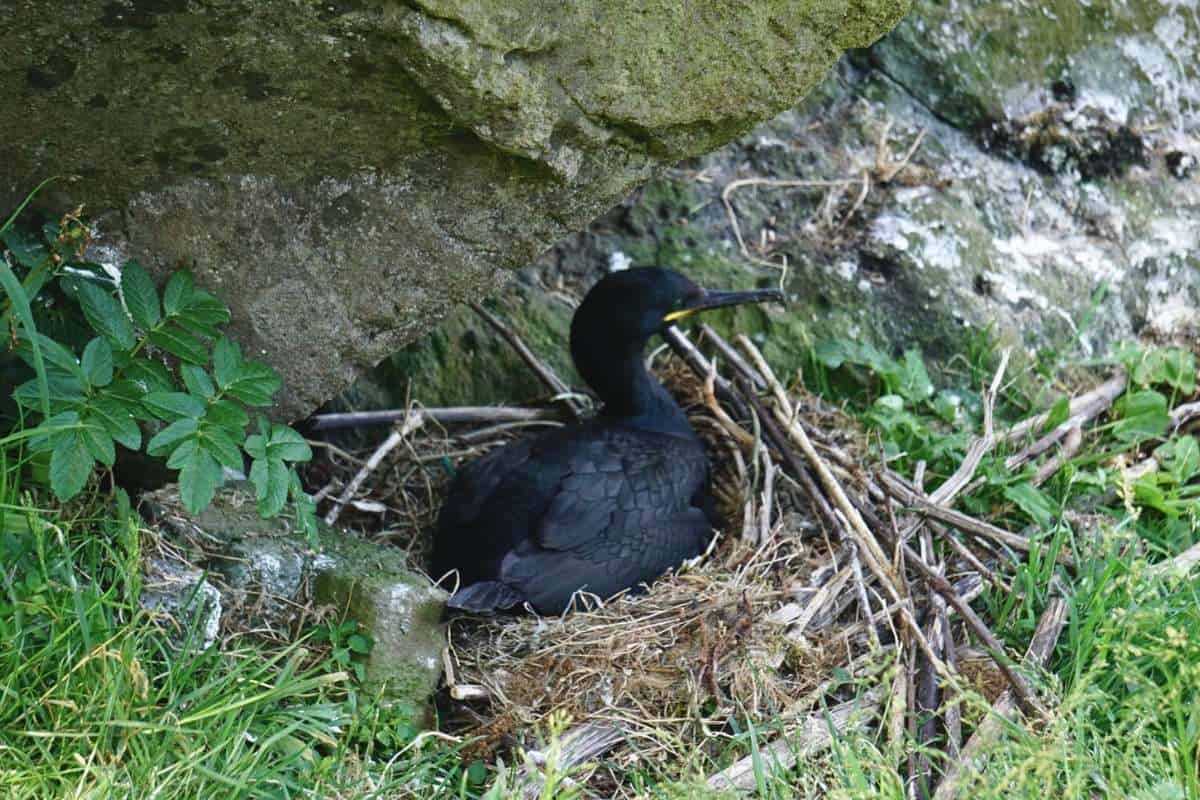
Lunga isn’t only the puffin’s domain. Many different seabirds nest here, and they seem to tolerate each other. I saw razorbills hanging out with a group of puffins, a shag nesting between two rocks and a raucous colony of guillemots occupying every surface of an enormous sea stack called Harp Rock. The noise they made was deafening.
Other seabirds I didn’t see that also nest on Lunga include the likes of Storm petrels, fulmars, Manx shearwaters, kittiwakes and skuas. A real birder’s paradise!
What else is there to see in the Treshnish Isles?

Whether or not you’re there to see the puffins, the Treshnish Isles have an abundance of wildlife and natural beauty. On both my trips, I saw bottlenose dolphins, and they came swimming right up to the boat.
I was also lucky enough to see minke whales. On my summer trip, it was just a flash of a fin, but back in 2021, I saw one feeding on the water’s surface. Atlantic grey seals hang out on the rocks and skerries, and there’s a good chance of seeing pups in October at the tail end of the boat touring season.
And of course, we can’t forget about Fingal’s Cave. The sea cave carved into Staffa is formed from hexagonal basalt rock. Boats get right up to the mouth of it, playing an overture by Felix Mendelssohn, who composed the piece after his visit. You can watch the waves crashing to the sound of the music, then step ashore and wander inside it yourself.
Best time to see the puffins on Lunga
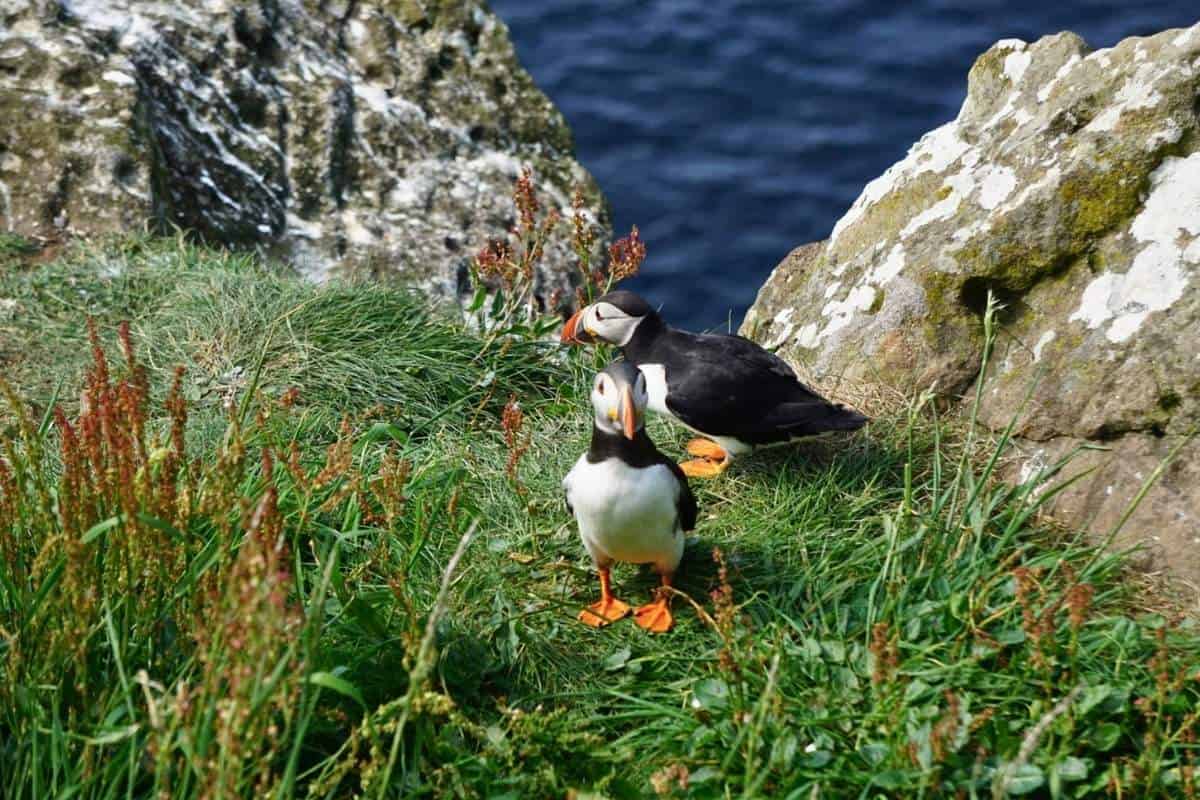
Puffins arrive on Lunga around mid-April and depart by the end of July to early August. Boat tours to the island don’t run outside of puffin season, although Turus Mara offers landings until the last remaining stragglers have gone (about mid-August).
If you’re keen to see Lunga’s puffin colony at its largest, aim for May to early July. Puffins mate for life, and May is the time when they’re busy with their burrows and incubating their eggs.
Throughout June and July, baby puffins (adorably called ‘pufflings’) begin to hatch, and you can see their parents returning to their burrows with silvery sandeels dangling from their beaks. I wasn’t so lucky on my trip, though!
At the tail end of July to early August, fledglings emerge from their burrows under cover of darkness so they can fly off across the Atlantic without drawing the attention of hungry predators.
Take the stress out of planning Scotland
Skip the overwhelm. I’ll create a personalised itinerary that’s realistic, practical and tailored to you, so you can spend less time planning and more time getting excited for your trip!
What to pack for puffin-spotting
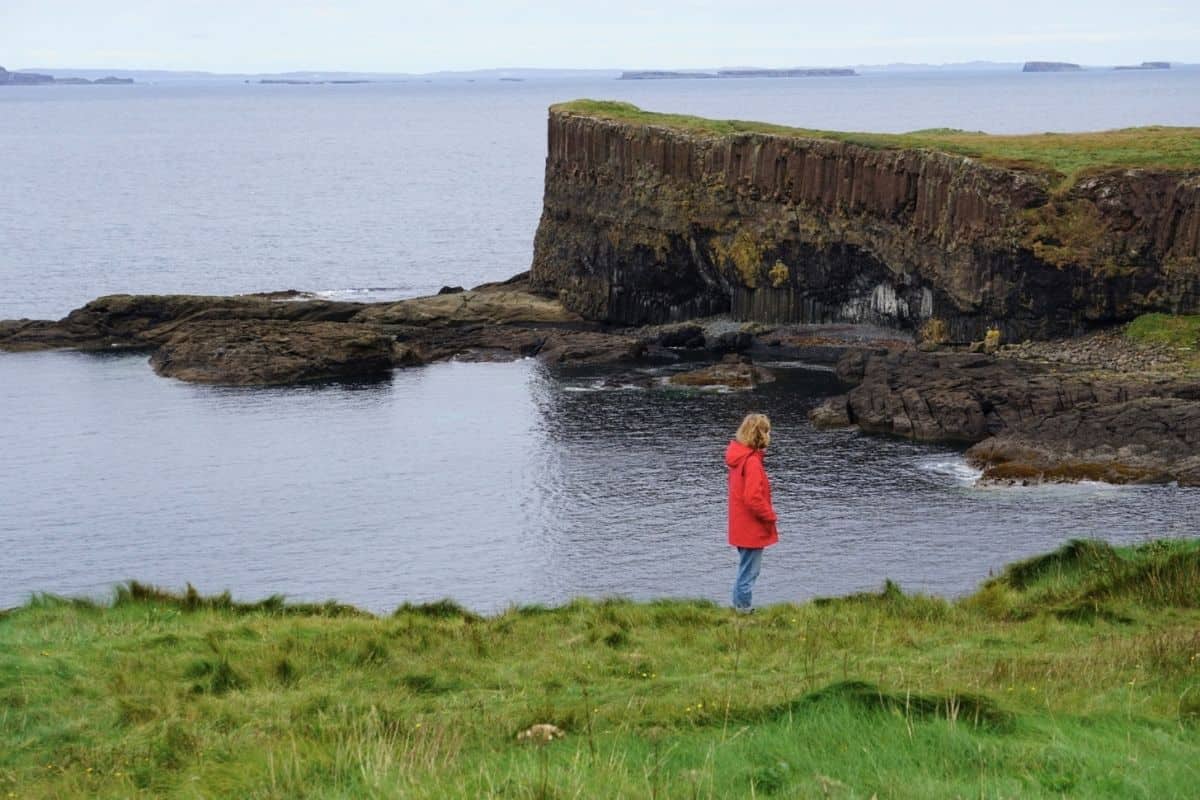
There are no facilities, cafes or shops on Lunga, so it’s important to pack and wear the right gear. You’ll also spend most of the day out in the elements, with the exception of the boat’s inside areas.
Here’s what I recommend:
- Walking shoes/boots – essential as you’ll be walking on uneven, rocky terrain on both Lunga and Staffa. They should have ankle support and good grip.
- Waterproof jacket – as you’ll be out in the elements, a waterproof jacket is always a good idea. It can also get cold, windy and wet on the boat’s outside deck.
- Lightweight fleece – a good idea to pack in case you start to feel a chill.
- Sun protection – it was a hot, sunny day on my trip, so sunscreen, sunglasses and a hat came in handy.
- Camera with a good zoom lens – there were a lot of photographers on my tour, and they all had huge cameras. I’m not saying you also need to pack one, but it’s a good idea to bring a camera with a zoom lens or a good phone camera, as you might end up kicking yourself otherwise!
- Binoculars – if you’re not too bothered about taking photos, a pair of binoculars could come in handy, especially if the puffins are out at sea, like on Staffa.
- Packed lunch and snacks – my boat tour was 11 hours, and food wasn’t provided. You’ll want to have something to eat on the boat and some snacks to keep your energy levels up.
- Water – there’s a small bar onboard with tea, coffee and water, but I still recommend bringing a big bottle of your own.
Puffin-spotting tips

Here are a few ways to make the most of your puffin-spotting experience while interacting with them responsibly:
Watch your step
Puffins burrow in holes in the ground. They’re everywhere, so stick to the marked path and take care not to accidentally tread on one.
Walk quietly and slowly
The puffins on Lunga are somewhat used to people, but like any wild animal, it’s important to be calm around them so you don’t stress them.
Give them space
Try to stay a minimum of two metres away from them. Sometimes, they get close to you, but don’t try to approach or force an interaction.
Sit down and observe
Puffins tend to stare at you as much as you stare at them. I found the best way to see them act more naturally was to sit quietly and observe if you have the space to do so. It’s how I finally got to see them billing. Otherwise, they’d always stop immediately whenever I drew near!
Leave no trace
A common-sense one, but please take all litter back with you. There are no bins on the island, and no puffin wants a plastic bottle or a chocolate wrapper in their burrow!
Final thoughts

If you’re on the fence about booking a wildlife boat trip to see puffins in the Treshnish Isles, do it. You won’t regret it! It’s the best place to see puffins in Scotland.
Seeing these comical little birds had been on my bucket list for years, and few places were better than Lunga to make that dream come true.
While puffin populations are larger on other islands like Orkney or St Kilda, Lunga is more accessible from the mainland. You can visit on a day trip from Oban and be back in time for fish and chips on the waterfront.
The jury is out on how Lunga compares to the Isle of May for puffins, as I’ve not managed to do it yet. I can say the Treshnish Isles are a brilliant day out with a good chance of seeing dolphins, seals, minke whales and a dramatic sea cave all in one trip.
If you’re looking for more of the best places to see puffins in Scotland (including on the mainland), make sure to take a look at my guide to the 9 top spots next.


