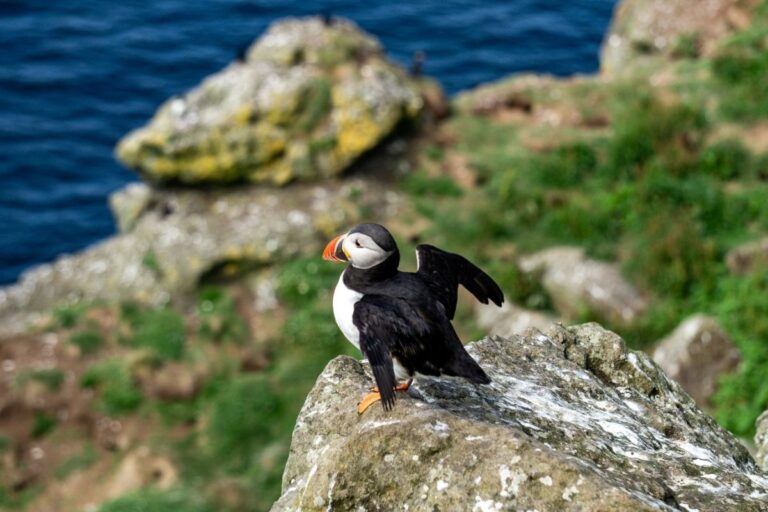
I Did a Cairngorm Reindeer Hill Trip: Here’s What It’s Like
This post may contain affiliate / compensated links. As an Amazon Associate, I also earn from qualifying purchases at no extra cost to you. For full information, please see my disclaimer here. Thank you!
They came trotting across the tussock-spotted field. The younger ones, with their stubby antlers, boldly led the way, while the older members of the herd brought up the rear with a little more nonchalance. I watched their advance with a dozen other people and our guides, who were armed with sacks of food for their eager charges.
You wouldn’t expect to find reindeer in Scotland, but high up on the Cairngorm Plateau where the climate is subarctic, they didn’t look out of place. After all, this is the Cairngorm Reindeer Herd, and they’ve been thriving in this habitat since the 1950s.
Not wild but free-roaming, the reindeer live year-round in the Cairngorms, and you can meet some of the herd on a hill trip. I did my Cairngorm reindeer hill trip on a cool day at the end of September and fell in love with their sweet personalities. Here’s what the experience is like, including the best time to do it and how to get there without a car.
What is the Cairngorm Reindeer Herd?
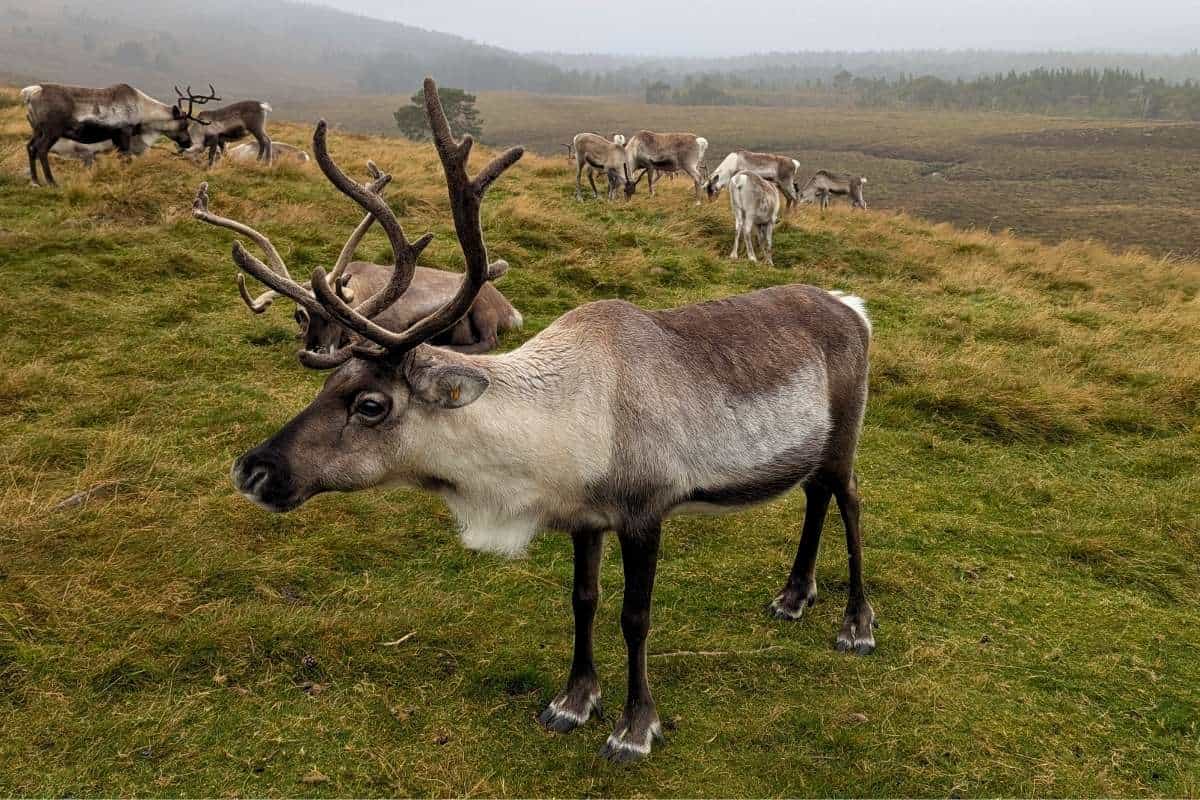
The Cairngorm Reindeer Herd has been roaming the Cairngorm Plateau since the first generation was brought over from Sweden in 1952. Mikel Utsi, a Swedish Sami from a long line of nomadic reindeer herders, masterminded the scheme.
In 1947, he honeymooned in Scotland with his wife Dr Ethel Lindgren. They were drawn to the Cairngorms as the landscape reminded them of the Swedish Subarctic (the couple lived in Cambridge, England). Utsi noticed the plateau was rich in lichen, a food source he knew reindeer loved, and so began his quest to bring the reindeer to the Scottish Highlands.
It wasn’t an easy feat. You can’t just bring new species to the UK, although archaeological evidence suggests reindeer were once native to Scotland but were hunted to extinction around the 14th century.
Today, thanks to Utsi’s efforts, a herd of 150 reindeer lives year-round in the Cairngorm Mountains. They’re carefully managed by the Cairngorm Reindeer Centre to keep them safe, happy and healthy and prevent inbreeding.
How to visit the Cairngorm Reindeer Herd

You can see the reindeer in a paddock from easter to the New Year or on a hill trip from about mid-February to the end of the Christmas holidays. Paddock visits are the easiest and most accessible way to see them. The paddock is next to the reindeer centre, so you don’t have to walk anywhere.
Hill trips are closer to their natural habitat, although they’re in a fenced field. It’s still huge with plenty of space to roam. You don’t meet the whole herd, just a group chosen for their suitable temperaments around people.
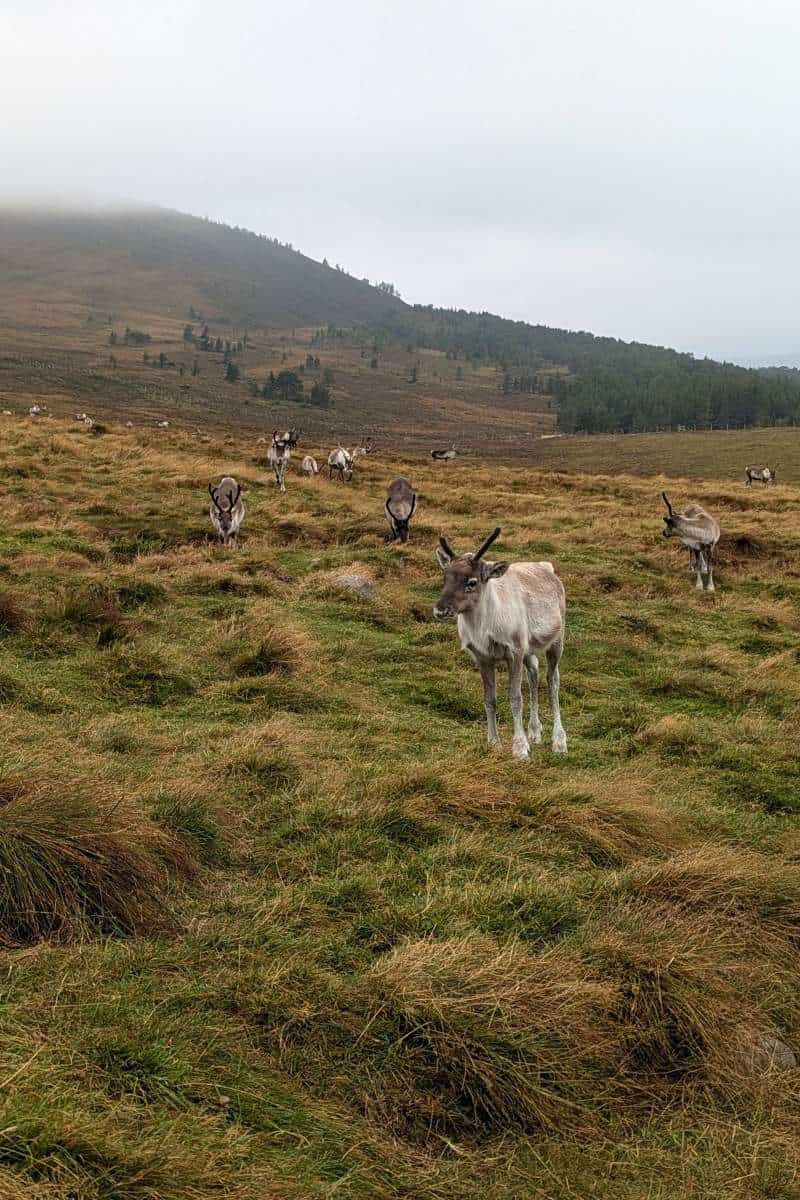
There weren’t any big bulls on my trip as it was getting close to rutting season and they were…busy. I was lucky enough to see a couple of adorable young calves, though!
Guided hill trips run twice a day at 11am and 2.30pm and last about 1.5 to 2 hours. Tickets are available to book online, and they’re released 30 days before. I recommend booking them as early as possible, as they tend to sell out quickly.
Join My Free Scotland Travel Community!
Want more insider tips on exploring Scotland without a car? Click here to join my free private Facebook group: Scotland Travel Tips & Planning, with over 14K like-minded members.
My hill trip experience
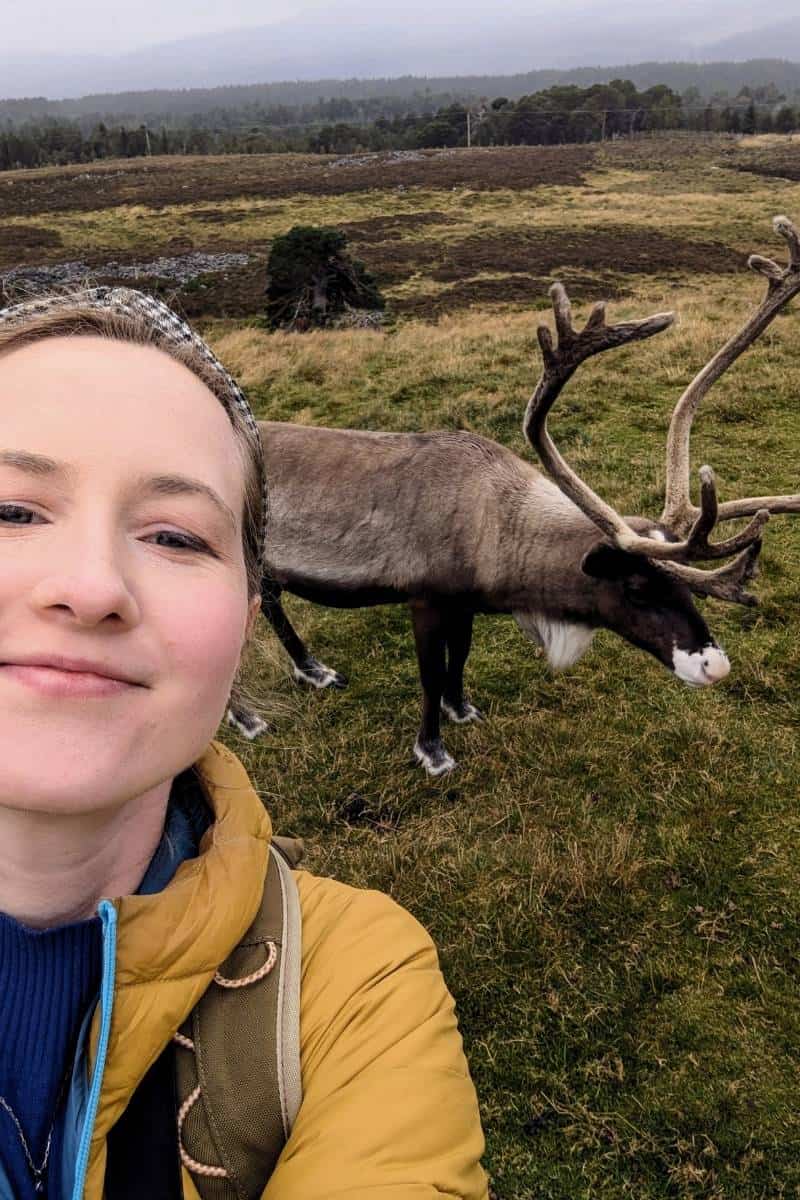
I joined my fellow hill trip-goers at the meeting point. Not long after, our three guides arrived, and once we had a brief introduction, we were on our way to meet the reindeer. We walked for about 30 minutes, the guides keeping a steady pace so everyone in the group could keep up.
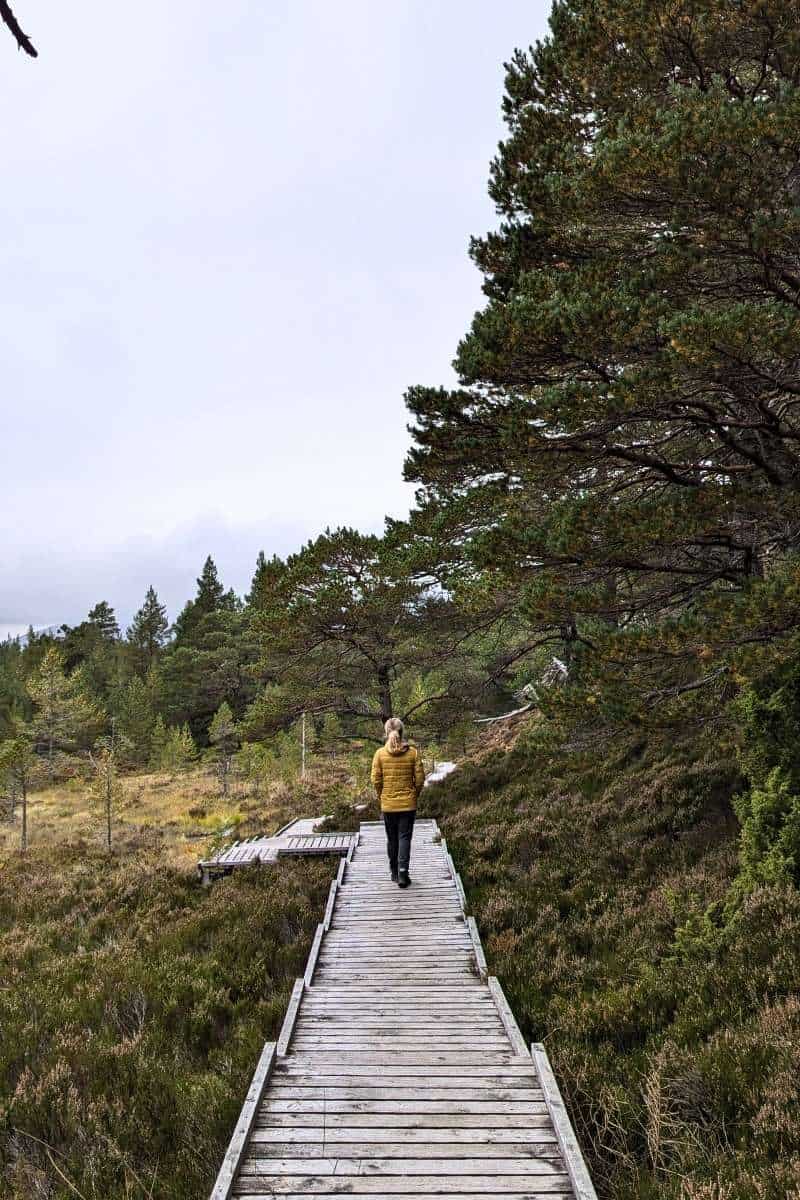
It was a beautiful walk. The path, uneven and narrow in places, meandered through Scots pine forest and over a burn, crossing a bridge named after Utsi. We soon came to a fence with a heavy, locked gate.
On the other side lay a boardwalk threading into the distance over the yellowing grass. It gave us much easier access to the field than navigating the uneven, ankle-twisting tussocks.
Once we were far enough inside the field, our guides told us the story of Utsi’s quest to bring reindeer to the Cairngorms and gave us an overview of the herd in their charge.
I was delighted to learn that each reindeer has their own personality and name. Each new generation is named after a theme, like teas, coffees, plants and famous authors.
They also gave us a safety briefing and asked us not to touch or pet them. Reindeer aren’t tactile animals and don’t tend to touch unless it’s to show dominance or shove the other out of the way. Since it’s an unnatural behaviour for them, touching and petting causes them stress.
Meeting the reindeer
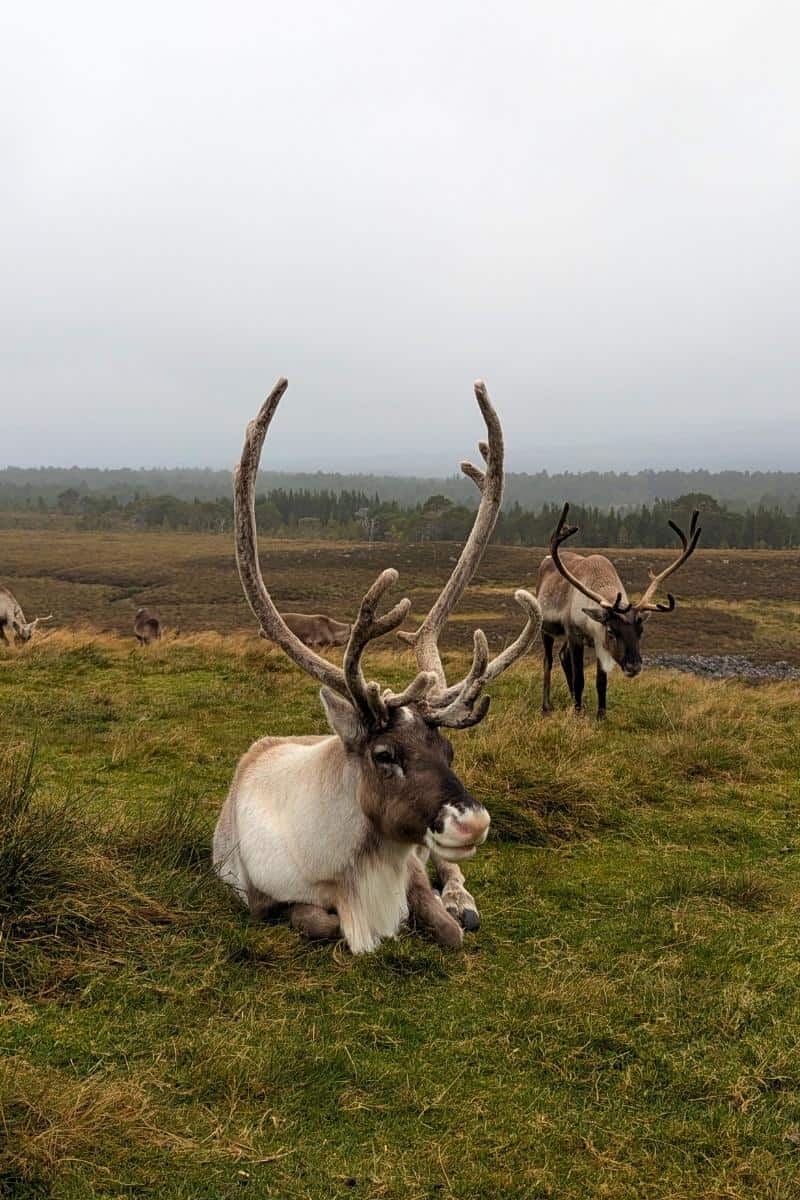
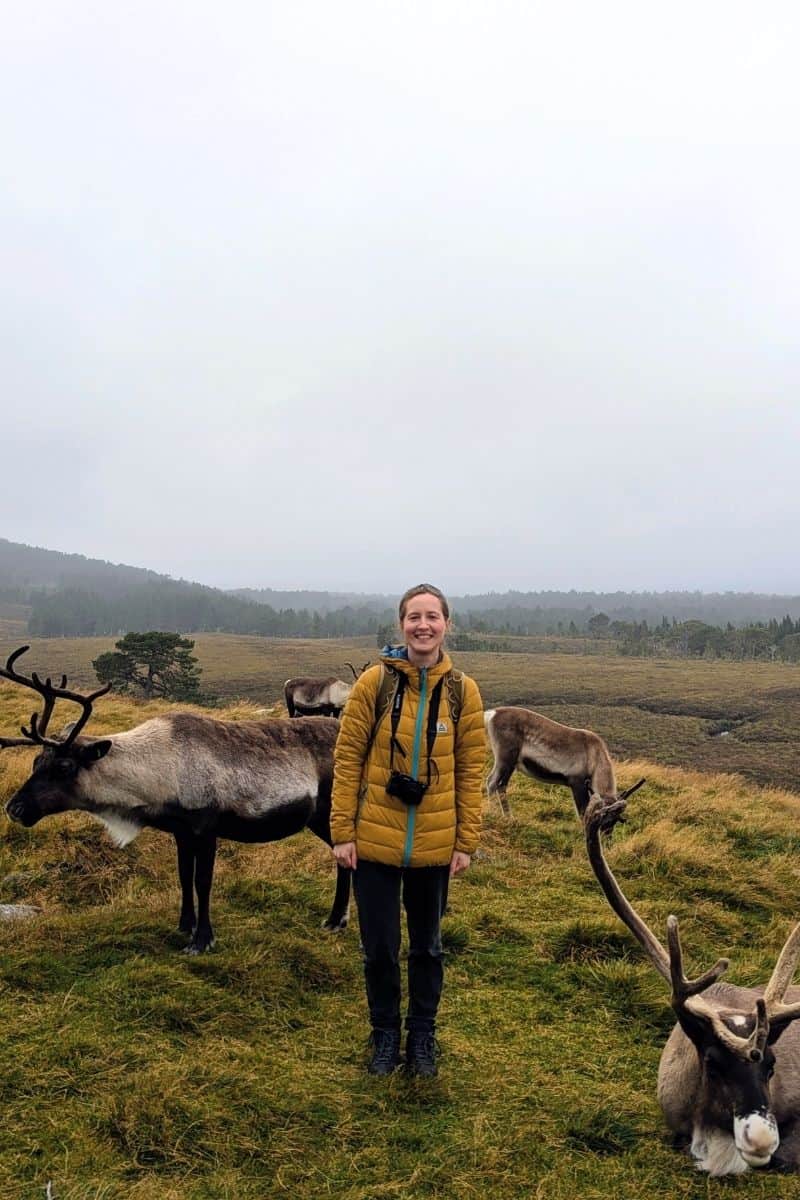
As our guides were talking, I spied the reindeer in the distance. They were beelining towards us, no doubt aware that the presence of people meant the promise of food. The youngest ones were skipping ahead to get first dibs on the sacks before the older reindeer pushed them out of the way.
As they drew nearer, an eerie ‘click-click’ sound echoed in the damp air as if a trooping band of invisible castanette players had snuck among the herd. The reindeer’s joints have evolved to make that noise so they can hear one another at night and in white-out snow conditions.
The guides split us into two groups, and we took turns standing in a line while they shook pellets into our cupped hands. All the reindeer in the field had arrived by this point, and they greedily nosed at the food, sometimes barging another out of the way if they were lower down in the pecking order.
Their noses were incredibly soft and downy, and they gobbled up the pellets without a speck of slobber. I did have to dodge a wayward antler tip when one reindeer with a particularly magnificent set eagerly tucked in. They don’t know their own size!
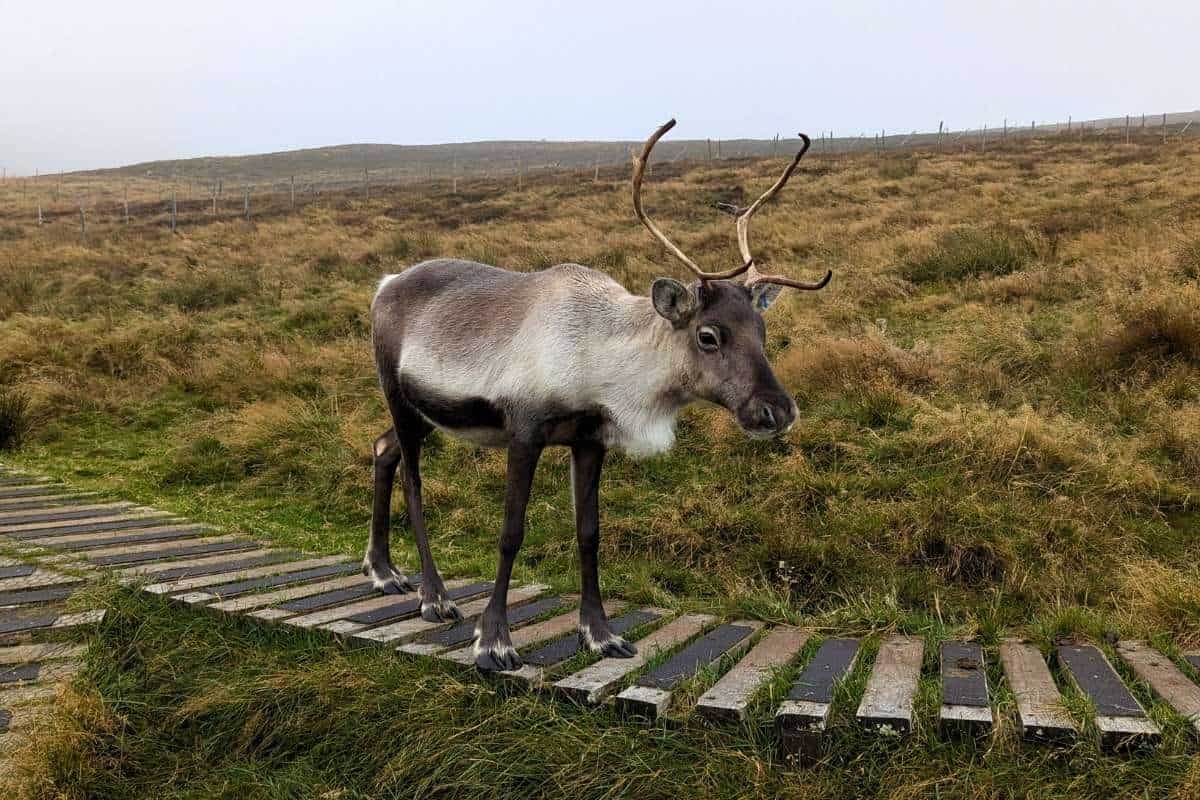
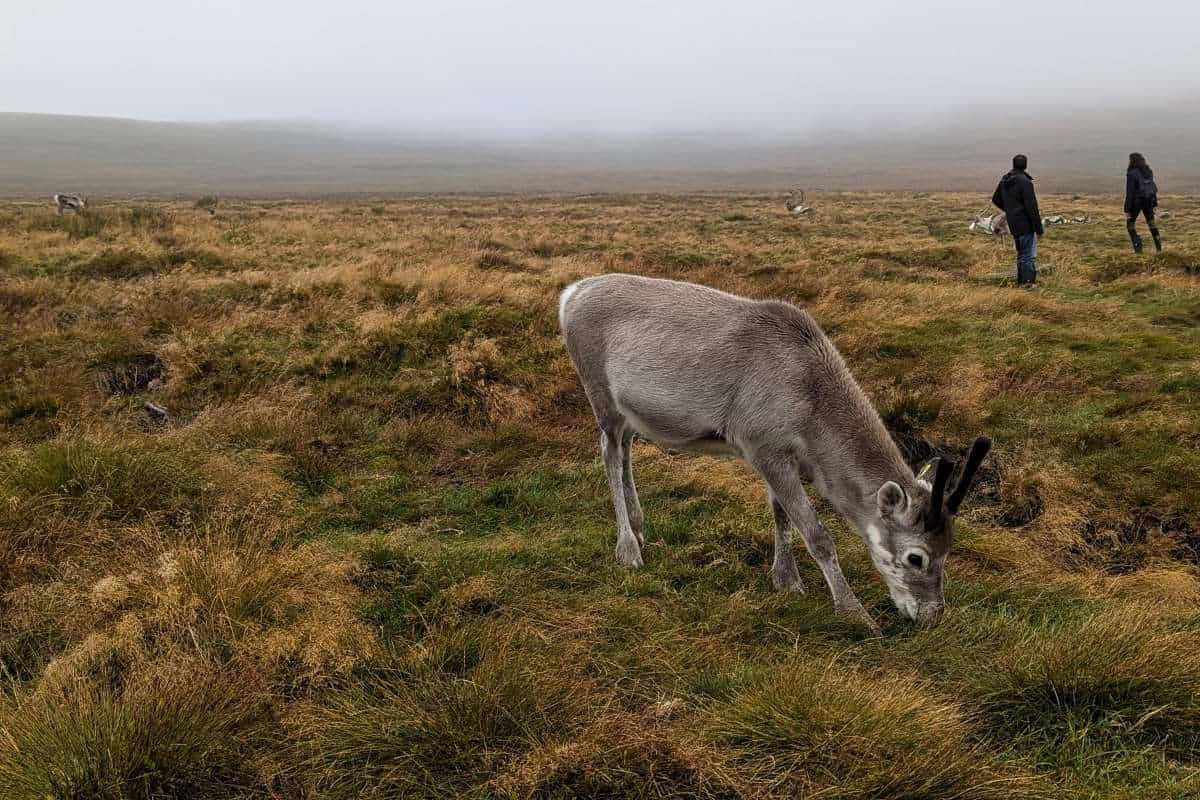
Afterwards, we were allowed to get among the herd and watch them plod about or graze the field. They were completely unbothered by us and came quite close, giving us a good look at their tantalisingly soft coat and fuzzy antlers.
Fun fact: All healthy adult reindeer shed their antlers, and they regrow each year. Females tend to lose theirs in spring while males lose theirs in late autumn. Those reindeer on Christmas cards? They’re an all-female team, including Rudolph!
With no more food forthcoming, some of the reindeer drifted away from us while a few others flopped down on the grass for a post-lunch snooze, their antlers swaying slightly as they balanced their heads.
The human group also began to drift apart as the hill trip was coming to a close and we could leave whenever we wanted. It was hard to tear myself away, but I eventually managed it, though not before saying goodbye to a few other reindeer stragglers, including a calf with spacehopper-like antlers.
From start to finish, my Cairngorm reindeer hill trip was just under 2 hours, and we had about an hour with the reindeer. Some hill trips include a reindeer walk where you walk with them along the boardwalk. That didn’t happen on mine, but I didn’t feel like I missed out.
💡 Editor’s tip: Before doing the hill trip, I spent my morning exploring Loch Morlich in Glenmore. It’s a gorgeous loch surrounded by forest trails. It also has the highest freshwater beach in Britain!
How to get to the Cairngorm Reindeer Herd

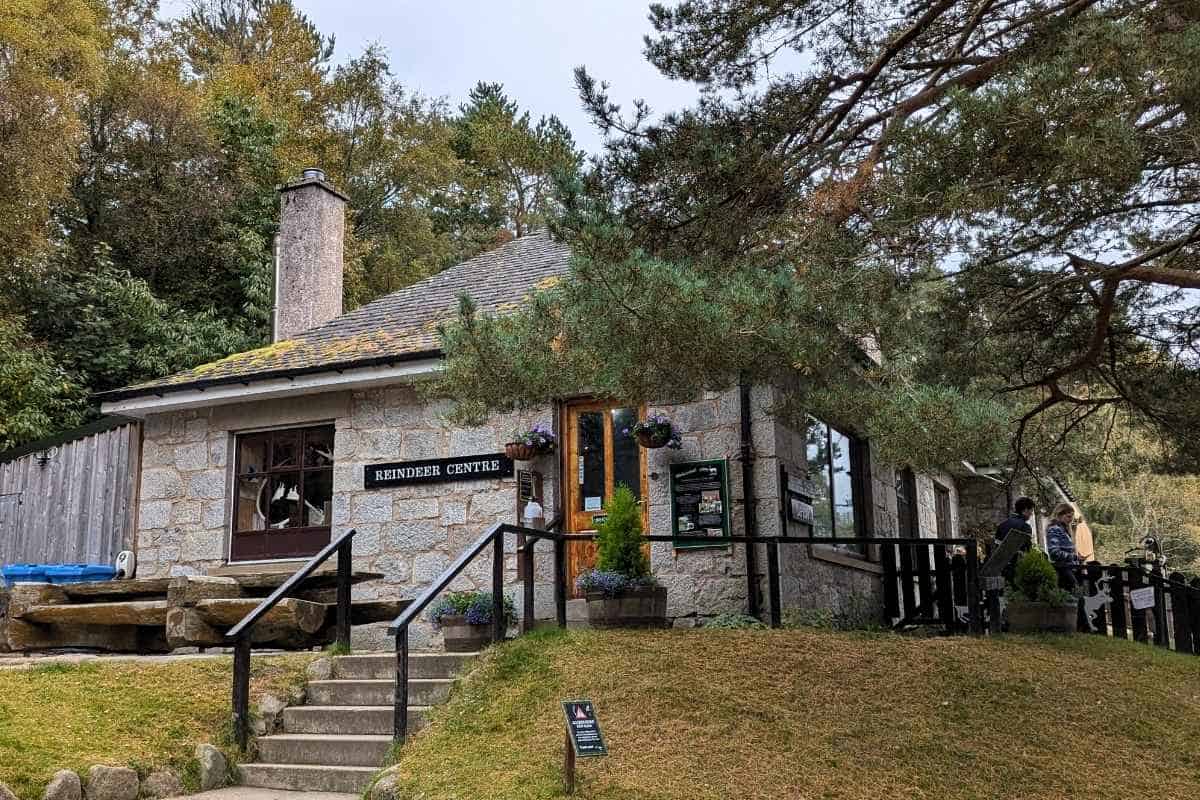
The Cairngorm Reindeer Centre is located in Glenmore, 15 minutes away from Aviemore. You’ll need to go there first to check in for your hill trip and find out the meeting point.
Since I travelled without a car, I made my way there from Aviemore by bus. The number 30 takes 16 minutes and drops you off at the Glenmore Visitor Centre. Nice and easy!
The next bit is a little more complicated. With a car, you can drive to the meeting point. In summer, this is usually the Sugarbowl Car Park, almost 2 miles up the hill.
If you don’t have a car, you’ll need to walk it. Unfortunately, it’s a 45-minute walk up a winding road without a pavement. I did this on the way up, which was nerve-wracking.
On the way down, I was determined to find a better route. By a stroke of luck, I spotted a footpath which led off the road and ran almost parallel to it to Hayfield Car Park. From there, I just had to walk on the road for 9 minutes to Glenmore.
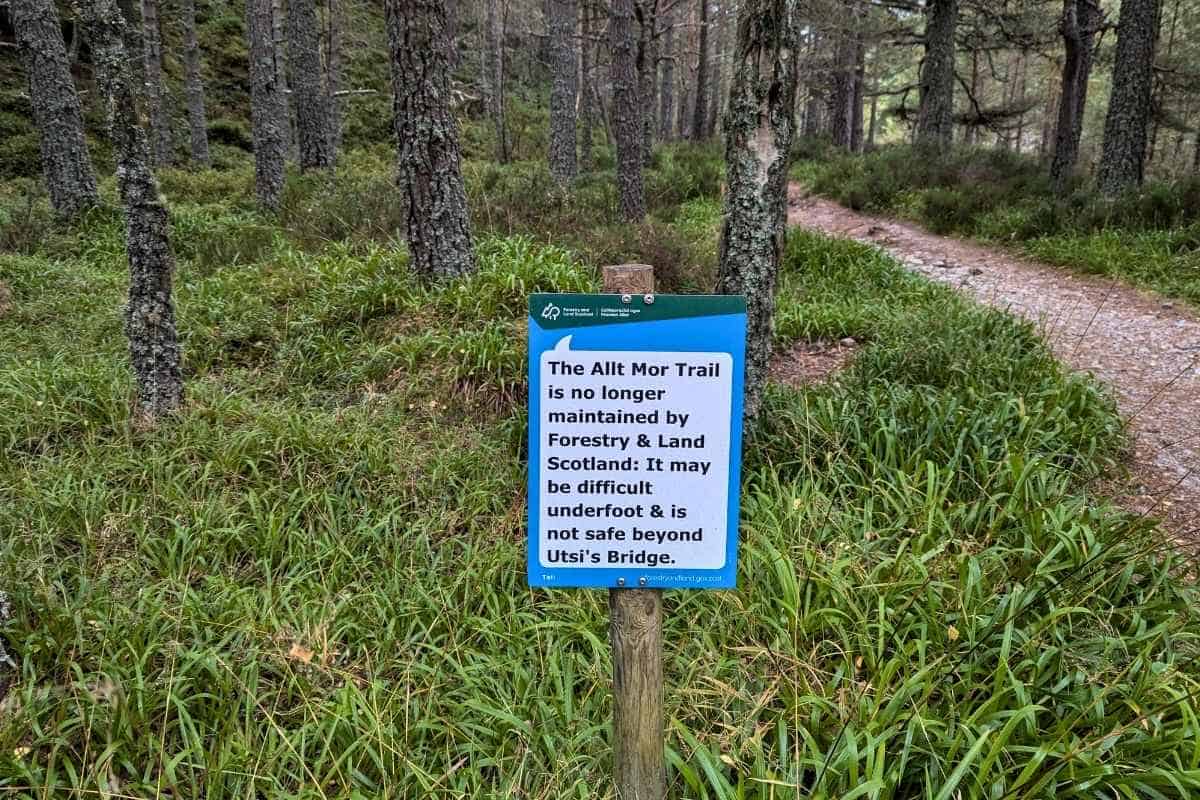
I later learnt the route I took was part of the Allt Mòr Boardwalk and Boulder Path. The terrain was uneven in places, but the boardwalks across the heather were a fun surprise.
There were a couple of signs warning me that the path wasn’t managed and it was dangerous beyond Utsi’s Bridge. That was fine as it was in the opposite direction, and it was a much better alternative than dodging traffic on the road!
If there’s just one or two of you, it’s worth asking the staff at the centre. They sometimes have space in their car and can give you a lift. From February to April, it’s not possible to access the meeting point without your own vehicle as the reindeer are on higher ground.
💡 Editor’s tip: If you decide to do the Allt Mòr Trail, give yourself a generous hour to get to the Sugarbowl Car Park. Paths are well-marked and signed, but it meanders more than the road. I used the road to guide my navigation to make sure I was walking parallel to it.
Can you bring kids to see the reindeer?
You can! The hill trips are suitable for children aged 4 and above for most of the year. One person in my group had a young child in a carrier on their back who couldn’t have been much older than 3 or 4.
From February to April, the Cairngorm Reindeer Centre doesn’t recommend children below the age of 12 as the conditions are much more extreme.
The guides on my hill trip advised parents with young children to hold their hands during the experience. The reindeer are perfectly safe, but they see height as a measure of dominance and tend to push around those who happen to be smaller than them, regardless of species.
If you hold your child’s hand, they see you as attached to each other. At least that’s what our guides said. It did do the trick, as they didn’t try to approach any young children.
There is no age limit for the paddock visits.

Take the stress out of planning Scotland
Skip the overwhelm. I’ll create a personalised itinerary that’s realistic, practical and tailored to you, so you can spend less time planning and more time getting excited for your trip!
What to wear on a hill trip
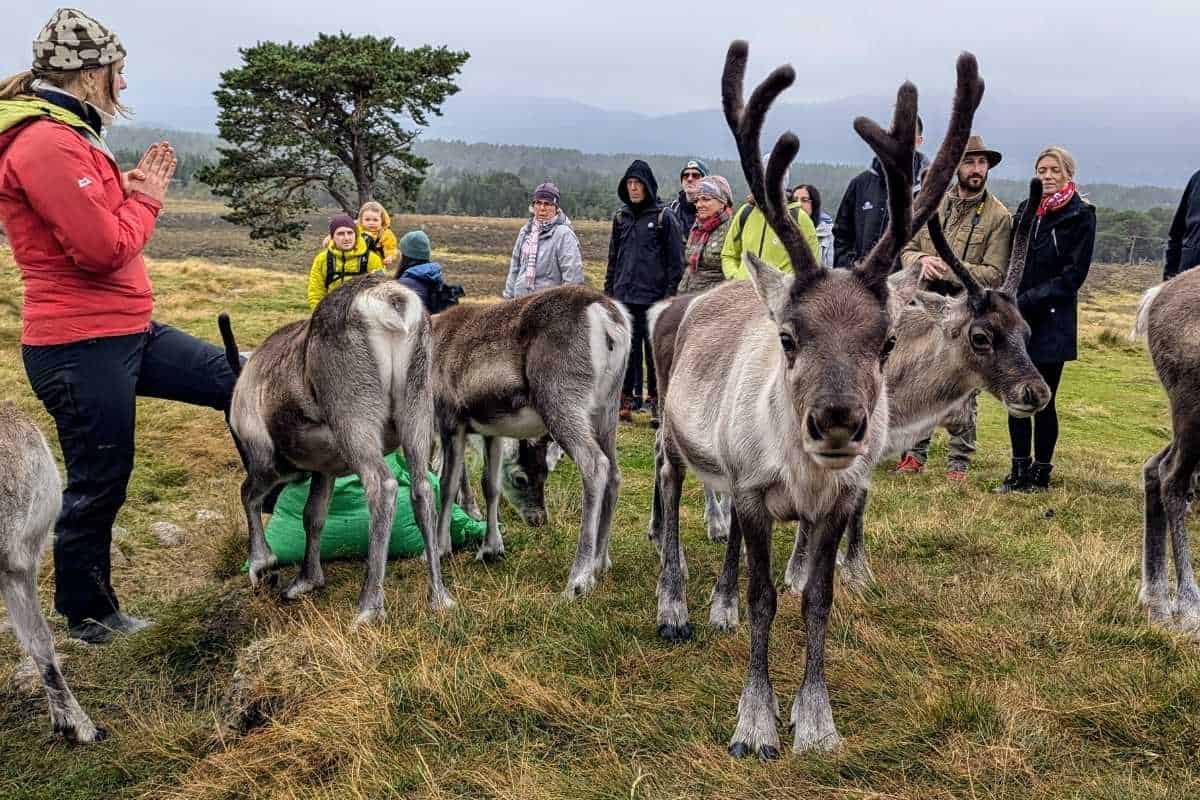
On my late September hill trip, the temperature was quite mild, but there was still an autumnal chill in the air, which made me thankful for my warm layers.
It’s important to wear the right gear so you can be safe and comfortable when meeting the reindeer. Here’s what I recommend:
- Walking boots – essential, as you will do a bit of walking to get to the reindeer, and the ground is uneven terrain. At the very least, your shoes should have ankle support. Wellies are also okay.
- Waterproof jacket – it was drizzling and cool, so I was thankful for mine. From September to April, I recommend wearing an insulated jacket.
- Lightweight fleece – it adds another layer of protection from the chill.
- Hiking trousers – I wore black jeans, but many others in my group wore loose-fitting cargo or hiking trousers. It depends on what you’re most comfortable in.
- Hat, scarf, gloves – I don’t tend to wear these unless it’s really chilly, but many people were in September. Swap them for sunglasses and a sunhat in summer!
- Waterproof trousers – handy in rainy weather or a winter visit in the snow.
- Thermals – a must in the winter snow. The Cairngorm Plateau’s climate is subarctic, so you’ll feel the cold, especially when you’re not moving around.
If you do nothing else, make sure you have the appropriate footwear and a waterproof jacket. In autumn and winter, you will need some warm layers.
Best time to see the Cairngorm Reindeer
Hill trips are available almost year-round from mid-February to the end of the Christmas holidays. From February to April, they roam higher on the plateau where the conditions tend to be much harsher.
If you’re not driving, don’t like the cold or want to do the hill trip with young children, I recommend timing your visit between May and early October.
You can get to the meeting point without a car, and the temperatures are much milder. In September, there were young calves, and most reindeer had their antlers.
As you can likely guess, Christmas is a very popular time to visit, and the Cairngorm Reindeer Centre goes all out for the festive season. Children can meet Santa in his bothy and hang out with friendly reindeer in the paddock or on a hill trip.
Final thoughts
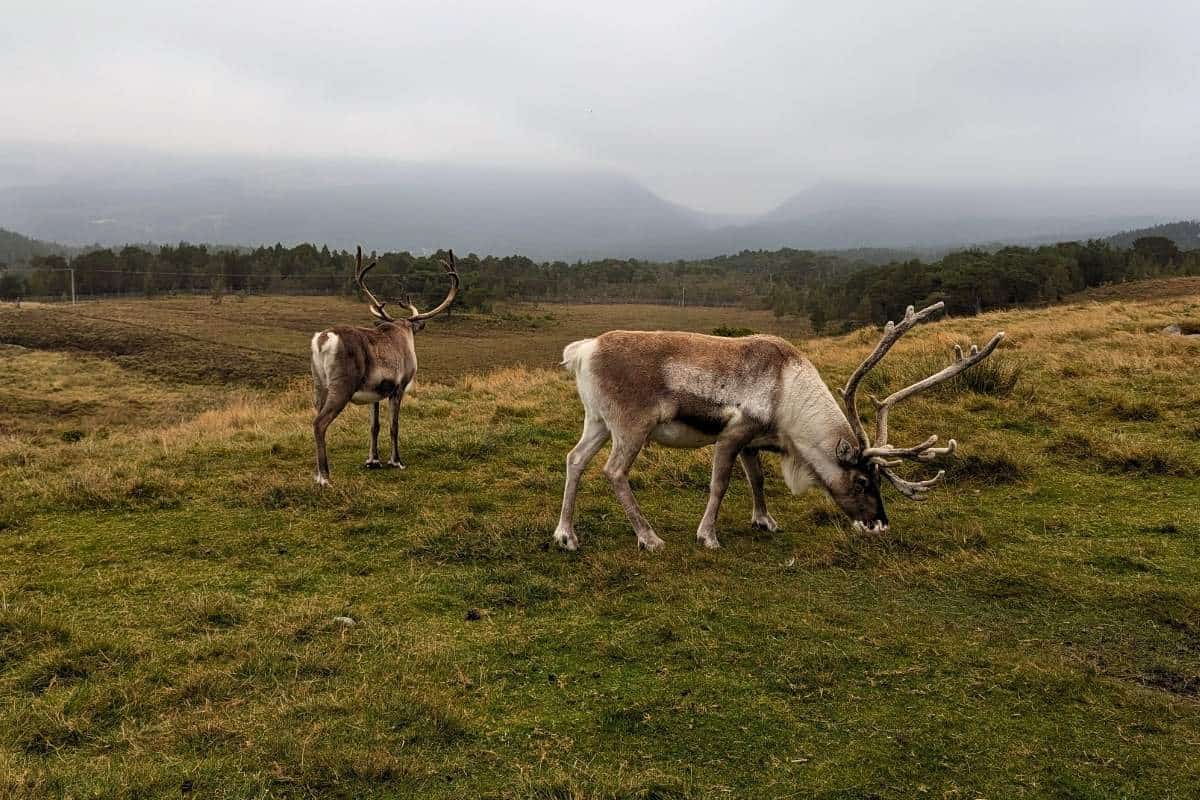
For animal lovers, a Cairngorm reindeer hill trip is a must-do. Each reindeer has a distinct personality, which is fun to see. Although they’re not wild, it’s also a chance to see them in Scotland as close to their natural habitat as possible.
Meeting the Cairngorm reindeer was a highlight of my trip, where I explored Scotland by train. It had been on my bucket list for a while, but I was worried that I’d need a car. When I realised I could do it without one, I immediately booked it and loved every minute.
Yes, you do have to walk to and from the meeting point, as there’s no other way to get there. Since I found an alternative way along the Allt Mòr Boardwalk and Boulder Path, I could treat it like the adventure it was.
If you’re looking for more (ethical) animal encounters in Scotland, make sure to take a look at my guide to the best places to see puffins next!
Not quite done with the reindeer? Here’s a snapshot of my hill trip experience in a YouTube Short: