
15 Best Ethical Animal Encounters Around the World
This post may contain affiliate / compensated links. As an Amazon Associate, I also earn from qualifying purchases at no extra cost to you. For full information, please see my disclaimer here. Thank you!
From observation-only elephant sanctuaries to community-run turtle rescues, discover the best ethical animal encounters across the globe.
Our world is full of wonderful wildlife and one of travel’s greatest joys is being able to tick experiences off your animal bucket list.
Sadly, with much of the wildlife population in decline, it’s now more important than ever to ensure that every wildlife encounter we experience is an ethical one.
To put it simply, a good ethical animal attraction puts the animal’s needs above yours. The animals are encouraged to live in or as close to their natural habitat as possible and they aren’t harassed for photo opportunities.
Ethical wildlife tourism is dedicated to conservation efforts and transparent about what your money contributes to.
Wildlife experiences help raise awareness of the threats to the animal population, and the more people are informed, the better the chance of inspiring real change.
Read on to find some of the top ethical animal experiences, sanctuaries and safaris around the world.
I’ve enlisted the help of responsible travel bloggers and local experts to share their favourite encounters.
1. Bonorong Wildlife Sanctuary, Tasmania
By Sharon Gourlay from Dive Into Tasmania

The Bonorong Wildlife Sanctuary is located just outside Hobart on the island of Tasmania. It’s a great place to visit if you want to not only see Tasmanian wildlife up close.
Your entry ticket helps fund its wildlife rescue services, wildlife hospital and conservation efforts like a seabird rehabilitation program and breeding programs for endangered species.
Located in the bush, the park has exhibits where you can see and learn about local animals.
All animals on display have either been rescued and cannot be returned to their natural habitat due to the type of injury or have been there for many years before it became a wildlife sanctuary. The workers joke that it’s a retirement village.
If you have wanted to get up close to animals such as wallabies and Tasmanian devils, this is a great chance.
There are regular talks from the staff and feeding times so you can see the animals in action, including after dark.
There is also the opportunity to get a rare insight into a wildlife hospital with special one-way glass so you can see the vets in action.
In addition to seeing and learning about the animals, there are also picnic areas and a small shop.
2. Chang Chill Elephant Sanctuary, Thailand
By Itz A Family Thing
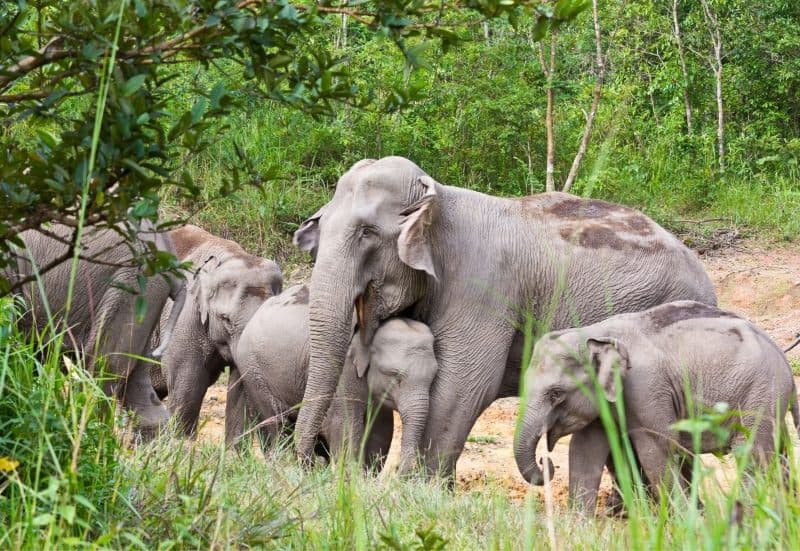
If you are heading to Thailand and have a dream of interacting with elephants, you must visit an ethical elephant sanctuary.
There are so many elephants in captivity that are abused, and as tourists, we unknowingly contribute to the brutal treatment of these beautiful creatures.
One of the best elephant sanctuaries that are leading in changing the way people interact with elephants is Chang Chill.
This elephant sanctuary has admitted to the errors of their ways as they used to offer elephant rides, then switched to human interaction, which included walks and feeding, but now they have moved to an observation-only model.
They were one of the first places to change how animal tourism is conducted in Thailand.
When you visit you are taken on a walk to view their rescue elephants in their natural habitat doing whatever they want. The elephants are not forced to cater to tourists.
Now you will be able to learn more about these amazing giants while getting hands-on with preparing their food, learning about herbs, and getting the chance to talk with the mahouts.
Chang Chill has now become the standard for all elephant sanctuaries looking to offer a unique experience, but not at the expense of the elephants.
Here they can truly roam and live a better life than before, and with your help, more sanctuaries will adopt this model.
Spreading the word through social media will help push ethical animal tourism in Thailand.
3. Pohatu Penguins, New Zealand
By Jennifer Parkes from Backyard Travel Family
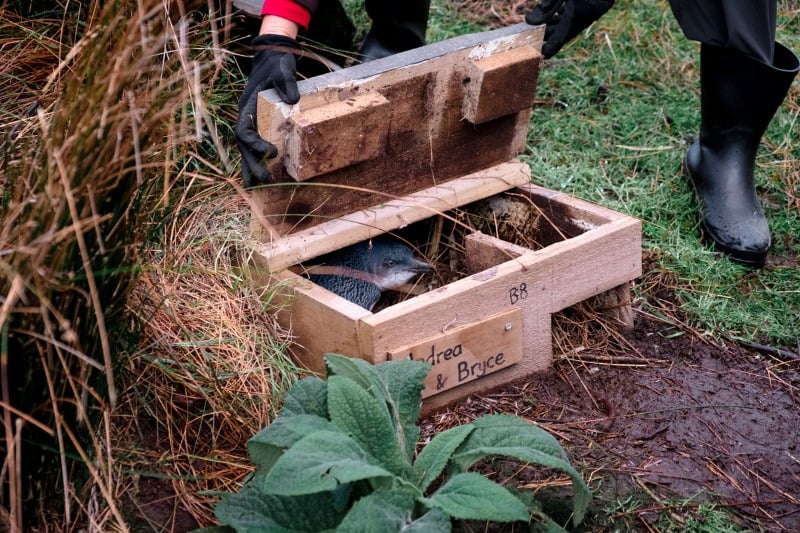
Pohatu Penguins is an incredible wildlife attraction in Akaroa, just a couple of hours from Christchurch, New Zealand.
The area is part of the Pohatu Marine Reserve and all tourist dollars go towards looking after the little blue penguins.
The venture started when the landowners realised that penguins were being killed by predators such as stoats, ferrets, dogs and cats.
With little help available from the government to preserve life, they took it upon themselves to help the penguins survive.
They have placed traps and monitor the predator population very carefully. They have over 1250 breeding pairs of penguins that live in Pohatu.
It’s a very ethical operation as they have little to no contact with the penguins themselves. They provide a safe haven and will help any that need care, but otherwise, it is a hands-off operation.
As the guides show you the property and explain all the work, you will have the opportunity to check a penguin nesting box or two.
Guides will check a few nesting boxes on each tour, and keep records. After a very quiet sneak peek, you head off to view the penguins swimming ashore.
With binoculars in tow, you can watch them socialise before heading back ashore for the evening. This is all done at length so you do not disturb their natural movements.
The owners are incredibly passionate about preserving the natural habitat and getting rid of predators and you will know that all your tour money is going to the right place.
So if you are wondering what to do in Christchurch while you are visiting, make sure you take a trip out to Pohatu.
Planning a trip to New Zealand? Read my guide to travelling solo in New Zealand.
4. Boulders Beach, South Africa
By Claire Stokes from Stoked To Travel
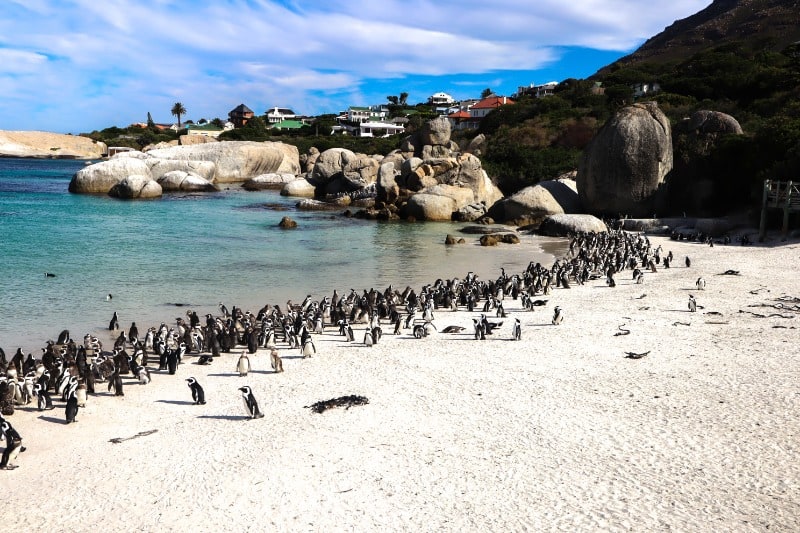
Boulders Beach, located in Simon’s Town on the Cape Peninsula in Cape Town, South Africa is home to a friendly colony of African penguins.
These penguins are listed as an endangered species and only 10% remain from the 1910 estimation of over 1.5 million population.
This unique penguin sanctuary started with just two pairs back in 1982, and the current penguin population stands at over 2,200, so it is contributing hugely to the species’ long-term future.
Boulders Beach gives you the unique year-round opportunity to get up close to penguins in the natural habitat from a viewing deck that stretches out over the shoreline.
Just along a wooden boardwalk is Foxy Beach, where you can get in the water right beside the penguins. Park rangers are monitoring the area and ensuring all guests keep their distance from the penguins.
There’s a full Code of Behaviour enforced by the ranger and a fenced-off nesting zone, which is kept at a distance for the penguins. They can move freely between their chill-out area, the beach and the water.
The penguins at Boulders Beach and Foxy Beach are part of SANParks – which is South Africa’s national park system.
This means that all entry fees go back to conservation projects. At Boulders and Foxy Beach, a lot of the funds go into creating safe nesting zones for the penguins.
Entry to Boulders Beach is R190 per adult for foreigners or R45 for adult South African nationals.
5. Watching Hector’s Dolphins, New Zealand
By Nadine Maffre from Le Long Weekend
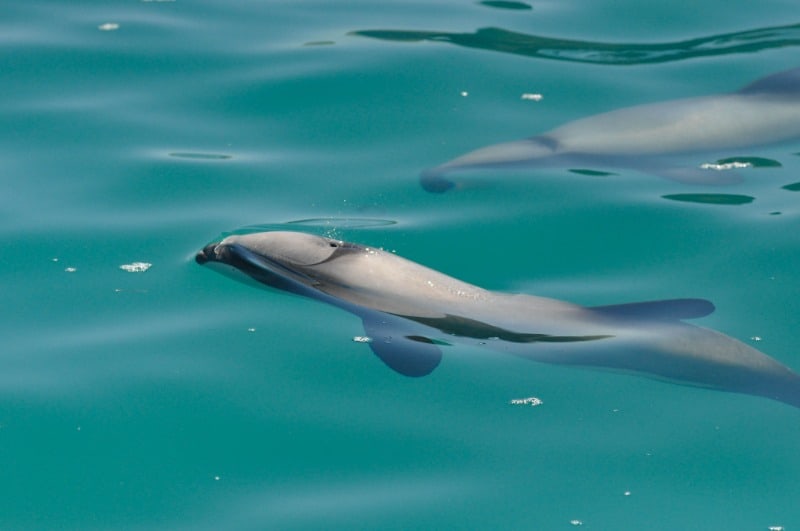
Watching wild dolphins is always going to be an incredible experience, but spotting Hector’s Dolphins in New Zealand is even more special.
Known as the world’s smallest dolphin, this curvy-finned species is native to the country, and the largest population can be found swimming in the waters of the Banks Peninsula, near Christchurch in the South Island.
Unfortunately, they are an endangered species due to fishing nets and their naturally slow reproduction habits, but an area at the mouth of the Akaroa Harbour has been turned into a marine sanctuary to try to stem the decline.
One company, Black Cat Cruises, is also helping to play a part in the conservation of Hector’s dolphins. And so when you book an encounter through them, part of your ticket price goes directly back into protecting the species.
The encounter itself is magical and an intimate experience as numbers are strictly limited.
The playful dolphins are naturally curious and so they’re happy to show off their tricks in the water below you. It’s most certainly a must-do experience when visiting New Zealand!
Read more about whale and dolphin encounters in New Zealand.
6. Currumbin Wildlife Sanctuary, Australia
By James Ian from Travel Collecting

The Currumbin Wildlife Sanctuary on the Gold Coast in Queensland, Australia is a great place to see Australian wildlife (and also some animals and birds from Asia and South America).
You can see kangaroos and wallabies, reptiles, crocodiles, birds of prey, koalas, wombats and Tasmania Devils.
The day is typically topped off by a regular later afternoon visit by flocks of brightly coloured rainbow lorikeets that come to feed on special food given to them.
There are several ways that the sanctuary helps the animals. The staff give talks about specific animals throughout the day, educating visitors about them and any threats to them in the wild.
This educational outreach is important as people who know about the animals are more likely to care about their continued survival.
The sanctuary has a strong philosophy of care for wild animals, not just for the ones they look after.
There is a large animal hospital on-site, where injured animals are brought from outside the sanctuary and nursed back to health before being released back into the wild.
Their own animals are kept in large enclosures that mimic the animals’ natural environments. The animals are fed according to strict protocols so that they stay healthy.
Animals in their care typically live several years longer than the average lifespan of their ‘wild’ counterparts.
Certain species such as the Tasmanian Devils and koalas are suffering terrible diseases in the wild that are decimating their populations.
Keeping healthy animals in wildlife sanctuaries is an important part of the species’ continued survival.
7. Turtle Sanctuary, Costa Rica
By Sinead from Map Made Memories

The small, community-run turtle sanctuary at Playa Junquillal in the Guanacaste region of Costa Rica is a not-for-profit ethical wildlife attraction.
Costa Rica is a country known for its green credentials and Junquillal’s turtle sanctuary is one of the country’s hidden gems.
The tiny, friendly village of Junquillal lies on the shores of a pristine, 3-kilometre-long sandy beach which is a popular nesting spot for endangered Olive Ridley, Black and Leatherback turtles.
Visitors to the sanctuary can volunteer for ‘night walks’ during nesting season. Sharp-eyed locals and tourists patrol the beaches at night to spot turtles laying their eggs.
Once the adult has returned to the sea, the eggs are carefully dug up and removed to an enclosed, beachfront ‘nursery.’ The nests are checked daily, and any hatchlings are carefully collected.
At sunset, volunteers can help release these precious baby turtles into the sea. The sanctuary chooses different stretches of the coastline each night, so predators do not become accustomed to one location.
The turtles are released a short distance from the sea so that they can imprint the beach to enable them to return to this exact spot in the future to lay their own eggs.
Volunteers monitor the turtle’s arduous journey, encouraging tired turtles with gently sprayed water and chasing off any predators.
This small community venture is not overcrowded with visitors and it makes for an unforgettable experience.
Costa Rica is one of the most sustainable travel destinations in the world! Read the full list.
8. Kangaroo Island Wildlife Park, Australia
By Pauline Vergnet from Bee Loved City

If you’ve always been fascinated by the native Australian wildlife, visiting Kangaroo Island is a must-do!
Located a couple of hours south of Adelaide, in South Australia, Kangaroo Island is home to the most famous Australian species. Kangaroos, wallabies, koalas… they are all there!
For the full experience, make sure to visit Kangaroo Island Wildlife Sanctuary. Hidden in the centre of the island, near Parndana, the sanctuary hosts loads of different species. The park carers are extremely knowledgeable and caring about the animals.
All animals have spacious enclosures and can walk around freely. As a visitor, you are also welcome to enter the enclosure (provided you behave and listen to the carers’ instructions).
The entrance fee is $33. You can also get a bag of treats for an extra $3 and give them to the wallabies.
There are also various activities organised by the staff such as koala encounters. Make sure to check the program as you get in so you can make the best of your day.
As you visit the park, you quickly realise how invested the staff is. During the bushfires of 2019/2020, they rescued hundreds of injured koalas and have been caring for them ever since.
Once the fires stopped (and providing their health was good enough), the koalas were released back into their natural habitat.
KI Wildlife Park truly cares about protecting the wildlife on the island while giving a chance to visitors to get up a bit closer.
9. L’Union Estate, Seychelles
By Rachita Saxena from MeanderWander

Aldabra Giant Tortoises are endemic to Seychelles and can be found on several islands around here.
Since this is a native species, Aldabra Tortoises are protected by the government. There are several small tortoise farms where you can encounter them and interact with them.
One such ethical farm is the L’Union Estate in La Digue which is home to at least 20 or more adult Giant Tortoises.
This farm also has a small nursery where they nurture and care for the baby tortoises so that they can grow up healthy and roam around the islands.
Tortoises are treated well here, so they’re quite friendly to the visitors. They just go on eating, resting, or doing whatever it is they want to do.
One of my favourite parts of visiting this farm was feeding the Giant Tortoises green leaves that are usually kept outside their pen.
You can simply spend time with these tortoises without continuous supervision and feed them as long as they are hungry.
Although you will come across several of these tortoises on the island, roaming about free, if you wish to meet several tortoises at once then L’Union Estate in La Digue, Seychelles is the perfect place to visit.
10. Tsavo National Park Safari, Kenya
By Steph & Lewis from Book It Let’s Go!
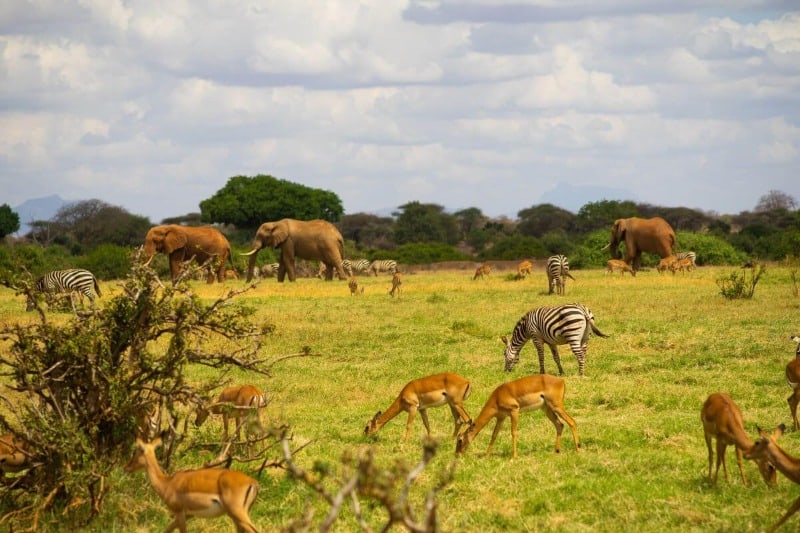
The most ethical way to see ‘The Big Five’ is to take a safari in Kenya.
Kenya has multiple national parks where you can enjoy safaris from single-day to multiple-week tours.
The largest protected area in Kenya is Tsavo National Park and it is an underrated gem when it comes to safaris in Kenya.
It’s one of the best wildlife safaris in the world. Unlike the Maasai Mara, Tsavo is relatively unheard of, budget-friendly and easy to cover in a 3-day Tsavo safari making it ideal for families.
During any safari in Kenya, you will see lots of wildlife on your game drives through the parks from zebra, boars, gazelles and ostrich to crocodiles, elephants, giraffes and lions.
If you stay in the safari lodges within the parks they have wildlife viewing places such as dedicated watering holes and feeding stations, where you can be feet away from herds of elephants drinking and playing or leopards feeding on carcasses.
Within Tsavo National Park there is a special electrically fenced-off area with 24-hour security patrols and cameras.
This is the Ngulia Rhino Sanctuary which was created after a surge in poaching in the 1970s and 1980s which took the number of black rhinos in Kenya from 20,000 to just 700.
Within the sanctuary, there are now around 80 protected black rhinos that can live and breed there with less risk of poachers attacking them.
11. Whale watching, British Columbia
By Lindsay Nieminen from Uncovering British Columbia
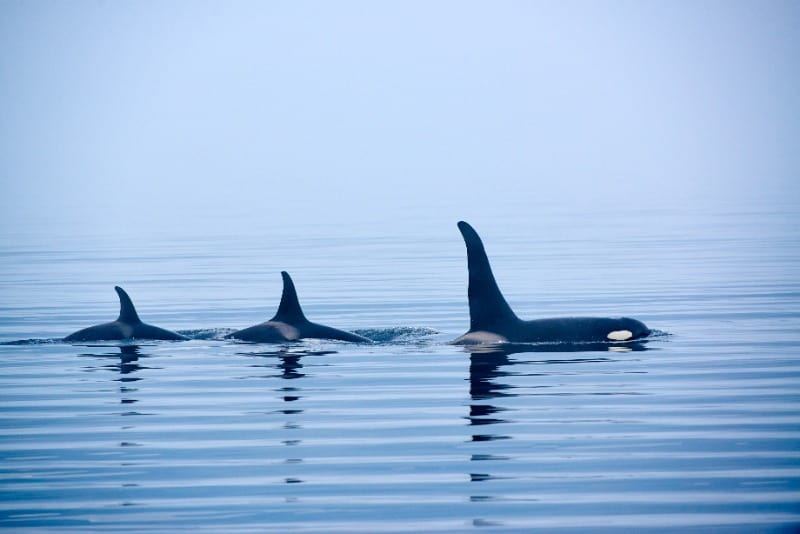
Whale watching in British Columbia is an exceptional activity and the perfect way to see orcas, grey whales, humpbacks, minke whales, seals, sea lions, and eagles in their native habitat.
Summer is the best time for whale watching in Vancouver but some companies operate all year round. There are several whale-watching companies operating out of Vancouver and Victoria and other communities all over Vancouver Island.
The popular sightings are always the orcas (killer whales) and British Columbia has both a local population and a transient population that passes through Canadian waters each year.
There are strict rules for whale watching vessels and they do not approach the whales. Vessels are required to turn off their engines if they end up closer than 100m to any whale and allow the whale to pass.
Sometimes you will get a thrill if you end up in the path of a whale, and they might breach much closer than 100m. There are laws in the US and Canada that protect these animals and it is a crime to harass them.
If you don’t have a telephoto lens (think 300m or larger), put your camera away and enjoy the viewing. The whales will just be a small dot in your iPhone lens!
12. Elephant Seal Rookery, San Simeon
By Kay from PCH1 Road Trip

The Piedras Blancas Elephant Seal Rookery in San Simeon is one of the best places to stop on the Pacific Coast Highway. Here you can watch the elephant seals sleep, fight, swim, and play.
Located in San Simeon, the rookery is among the top places to visit in California for wildlife lovers. This nonprofit organisation is free to visit and provides a safe environment for the giant creatures.
The Northern Elephant Seal is the largest in the Northern Hemisphere and can easily grow to several thousand pounds in weight.
The seals were once widely hunted and were almost on the verge of extinction but since then conservation efforts have increased their numbers.
Visitors can see the adult elephant seals, both male and female, at the rookery year-round.
Depending on the month you may also see pups and juvenile seals frolicking in the water. The elephant seals lounge on the beach and can be seen easily from an accessible boardwalk trail.
The rookery is easily accessible from Highway 1 and has a large parking lot.
13. Swimming with Whale Sharks, the Maldives
By Clotilde Passalacqua from A Princess Travelling With Twins

The Maldives is one of the best bases to venture into one of the most incredible encounters in the world.
It’s possible to organise a holiday in the Maldives on a budget and both from the luxurious resorts and from the local islands you can join excursions which allow you to swim with the whale sharks.
Whale sharks are the largest shark species in the world but these gentle giants are safe for humans to interact with.
The best area to spot these impressive animals is the South Ari Atoll, almost all year round there are high chances of an encounter (less from May to September, but still possible).
What makes swimming with whale sharks an ethical wildlife attraction in the Maldives is the rigorous approach to the experience and the presence of the MWSRP (Maldives Whale Shark Research Program) in this area.
Whale shark spotting tours ensure that tourists do not get too close or touch these gentle giants, they do not provide food and this ensures that the sharks do not get used to returning for food.
There is also a limit on how many boats should be out in the same spot at the same time.
MWSRP is a charity that takes care of the careful monitoring of whale sharks. The results are shared to influence the tourism industry and the government to ensure sustainable tourism.
I swam with reef sharks in Fiji! Find out what the experience was like
14. Sheldrick Wildlife Trust, Kenya
By Pamela from The Directionally Challenged Traveler
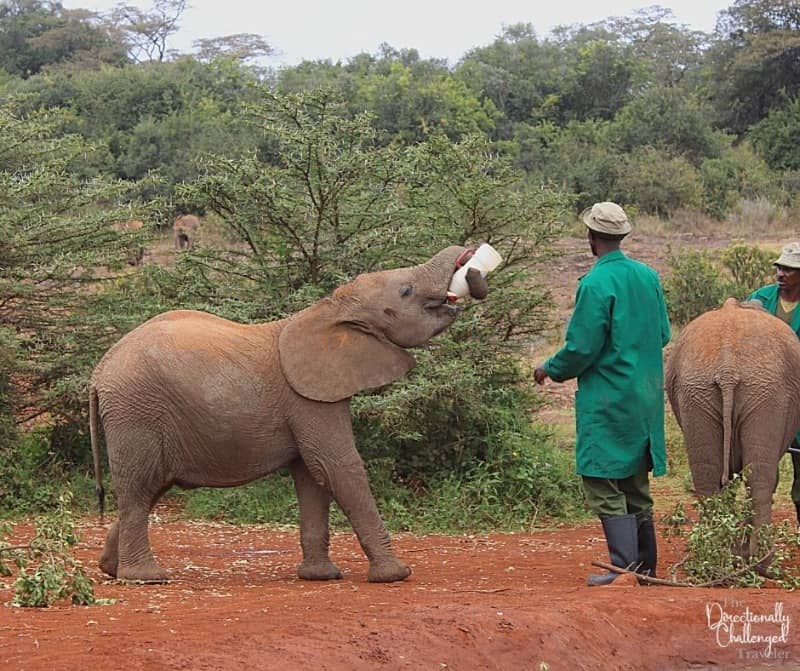
Elephants are one of the most graceful and peaceful creatures that roam our earth. Unfortunately, they are still being poached for their ivory tusks and are considered an endangered species.
Poachers not only hurt the elephant population but also leave a number of baby elephants orphaned. Luckily, that’s where the Sheldrick Wildlife Trust comes into play.
The Sheldrick Wildlife Trust has been passionate about saving orphaned elephants and rhinos for decades. They rescue and rehabilitate the animals and ideally reintegrate them back into the wild.
Not only does the Trust take in animals but they also have five mobile veterinary units which treat animals in the wild, 15 Mobile de-snaring teams to help trapped animals, and Aerial Surveillance and Anti-poaching units to help prevent poaching.
If you’re in Kenya, then a visit to the Sheldrick Wildlife Trust is a must!
Located an hour outside Nairobi, you can learn about the important work they do, ‘adopt’ an elephant to support the organization, and even witness baby elephants being fed!
You can do all of this while knowing the elephants are truly cared for by staff.
There aren’t any elephant rides or feeding at this elephant orphanage. You only get the chance to pet the elephants if they come to you.
Getting up close to elephants and hearing each one of their stories is an experience you won’t forget.
15. Swimming with manta rays, Fiji
By Francesca Brooking from Little Lost Travel

Swimming with manta rays is one of the best wildlife experiences to tick off your bucket list and Fiji is a top destination to do it.
One particular spot manta rays migrate through is the channel between Nanuya Balavu and Drawaq, two islands that belong to the Yasawa Island group.
You can join a tour here that allows you to see the manta rays up close but you’re instructed to keep a respectable distance from the animals and you’re not allowed to harass them.
The manta ray population is monitored by the Manta Trust, an organisation that operates from Barefoot Manta Island Resort, close to where the manta rays swim by.
The Trust’s mission is to research the effects of tourism on the manta ray population to ensure that all human activity with these creatures is carried out in an ethical manner.
The best time to swim with manta rays is from May to October.
These wonderfully alien-like creatures are completely harmless but always listen to your guide to make sure that you both have the best possible experience together.
Read more about my experience seeing manta rays in Fiji!
What ethical wildlife and animal experiences have you done around the world? Let me know in the comments!
Looking for more ethical animal encounters & tips? Check out these posts!
- How to Pick the Ultimate Ethical Travel Activity
- For the Love of Animals! Avoid These Cruel Animal Attractions When Travelling
- What is Ecotourism and Why is it Important?
Inspired? Pin me for later!


