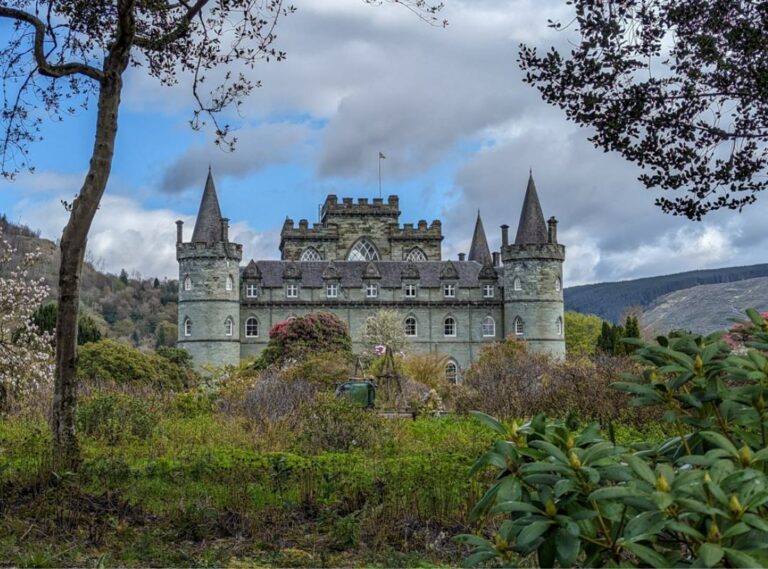
7 Most Scenic Train Journeys in Scotland with Epic Views
This post may contain affiliate / compensated links. As an Amazon Associate, I also earn from qualifying purchases at no extra cost to you. For full information, please see my disclaimer here. Thank you!
Travelling by train in Scotland isn’t just transport; it is one of the best ways to see the country. From your seat, you can watch mirror-like lochs, rugged mountains and endless coastlines unfolding outside your window.
These scenic train journeys in Scotland open up some of the best landscapes without the need for a car. You can cross the vast wilderness of Rannoch Moor and roll over the Glenfinnan Viaduct on the West Highland Line.
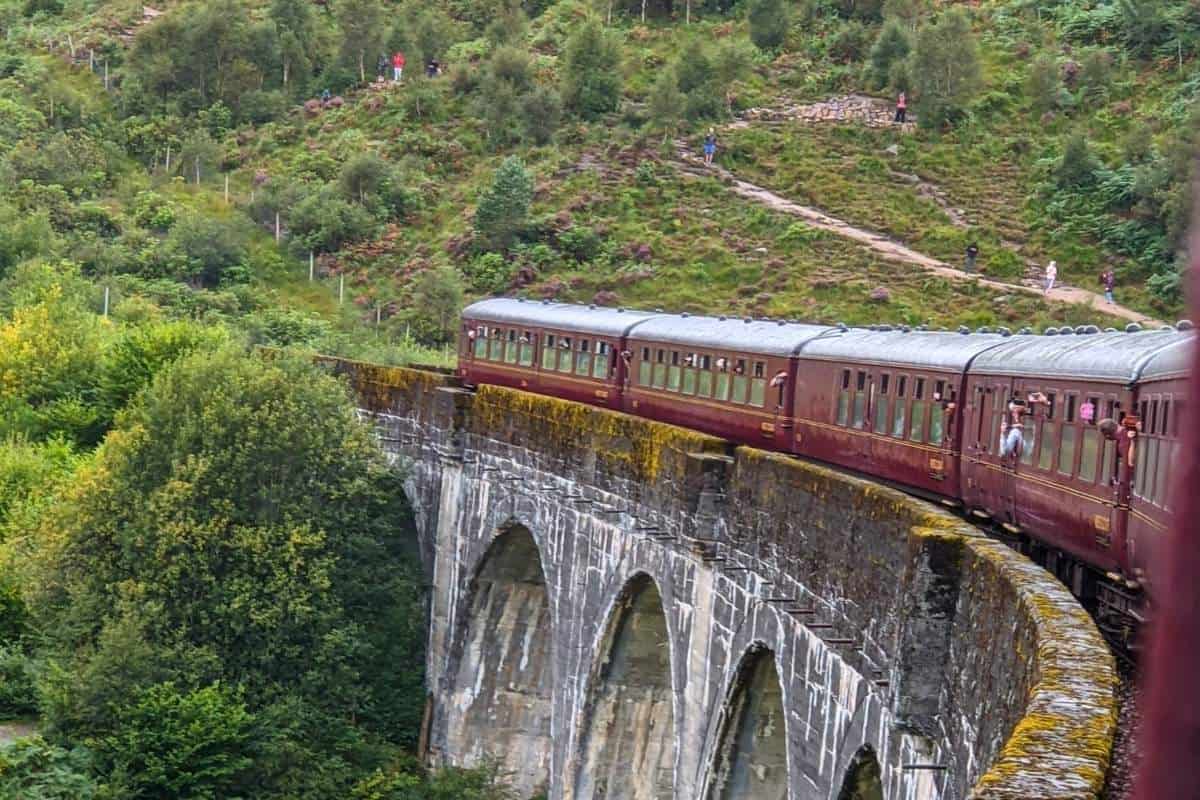
Spy the jagged Torridon Peaks and the Isle of Skye on the Kyle Line. Cross one of Europe’s most important blanket bogs in the Far North, and skirt along the edge of the Cairngorms National Park on the Highland Main Line.
If you’re looking for the chance to explore Scotland’s best scenery by rail, these train trips are a must-do. Some are listed as Great Scenic Rail Journeys, and others I’ve included myself, as they’re just too good to miss!
1. West Highland Line: From Glasgow to the Highlands
The West Highland Line is rated as the most beautiful railway journey in Scotland. Departing from Glasgow, the train travels up into the West Highlands to Mallaig and Oban.
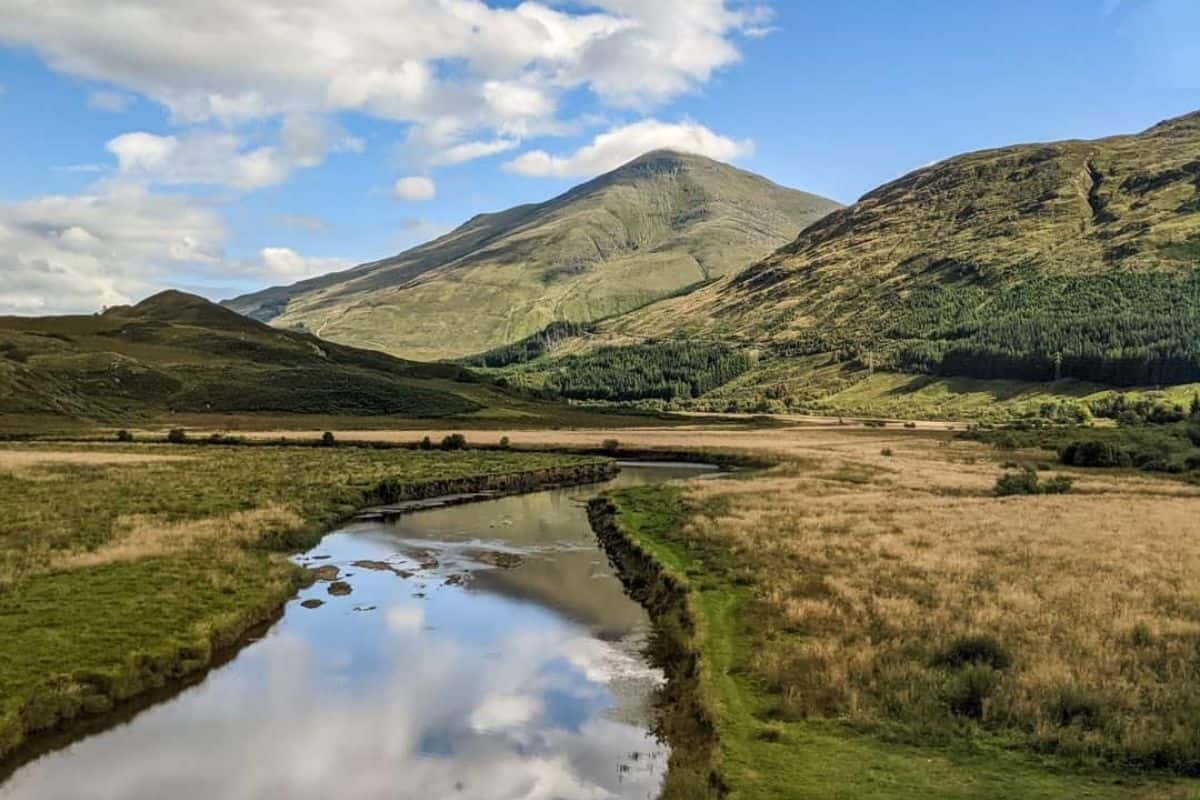
At Tarbet, it joins the northern tail of Loch Lomond, and you have jaw-dropping views of the loch surrounded by the Arrochar Alps. Make sure you look out the window on the right!
At Crianlarich, the train splits, with one half going to Mallaig via Fort William and the other going west to Oban. The route to Fort William is my favourite as you pass through some of Scotland’s most extreme landscapes, which you can reach without a car.
Forests fall away as you climb higher into the mountains. Running parallel to the River Fillian to Tyndum, you might see hikers following the West Highland Way alongside the track.
Keep an eye out for Alt Kinglass Viaduct, then settle in for a mountain panorama as you ride through the most remote part of this line. Wide moorlands stretch as far as you can see at Rannoch, and you pull into Corrour, the UK’s highest and most remote mainline train station.
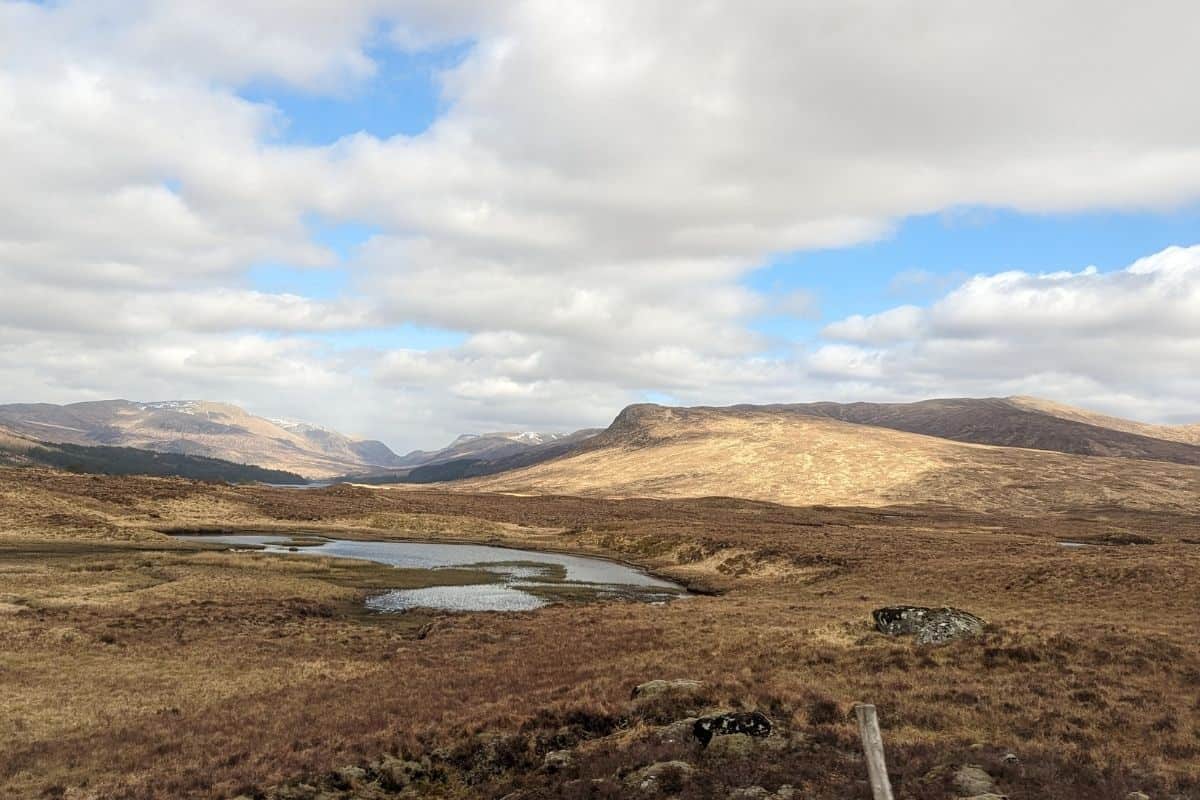
Turning west, the trees return as you arrive in Fort William at the foot of Ben Nevis, the UK’s tallest mountain. On a clear day, you might just catch a glimpse of it on the left. The train continues to Mallaig, which is what we’ll cover next, as it deserves its own shout-out.
The West Highland Line is served by ScotRail, but the Caledonian Sleeper also runs all the way through from London to Fort William. I remember watching the early morning sunlight spill across Rannoch Moor from the train window. It was worth every minute of lost sleep.
Departs / Finishes: Glasgow → Oban / Mallaig
Length: 3 hrs 7 mins – 5 hrs 21 mins
Look out for: Loch Lomond, Arrochar Alps, Rannoch Moor, Corrour
Get off at:
→ Ardlui (Loch Lomond views that make a great day trip from Glasgow)
→ Corrour (UK’s highest station, remote wilderness)
→ Fort William (Ben Nevis & Glenfinnan tours)
→ Oban (Gateway to the Isles)
Editor’s tip: Trains can be delayed in bad weather. Always check Traveline Scotland and live ScotRail departures before setting off on your scenic rail journeys in Scotland.
2. Fort William to Mallaig: The Jacobite Steam Train
This is the last leg and best part of the West Highland Line. Running from Fort William to Mallaig, it’s made famous by one of the most iconic steam train journeys in Scotland, the Jacobite. You might recognise it as the Hogwarts Express in the Harry Potter film franchise.
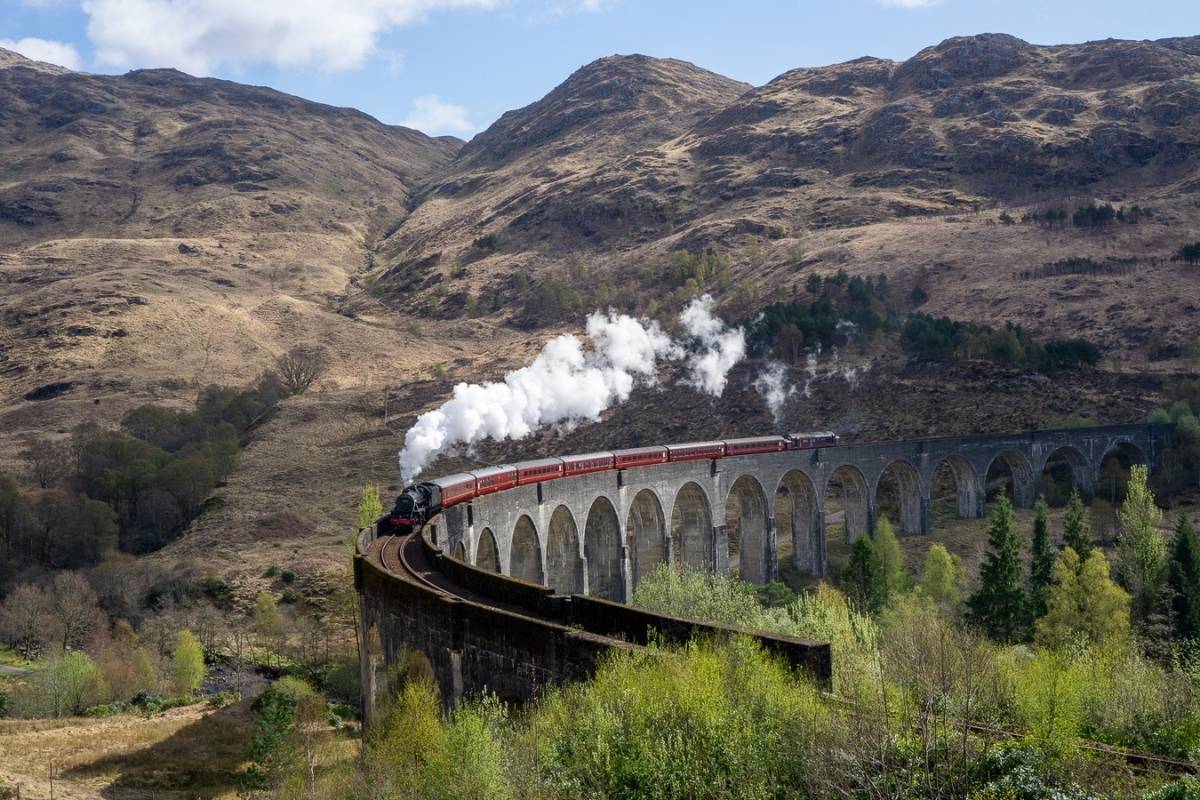
You don’t need to be a fan of wizards to appreciate the scenery, though. There is so much to see packed into an hour and a half…and a lot of lochs. You skim along the northern edge of Loch Eil with mountains on either side.
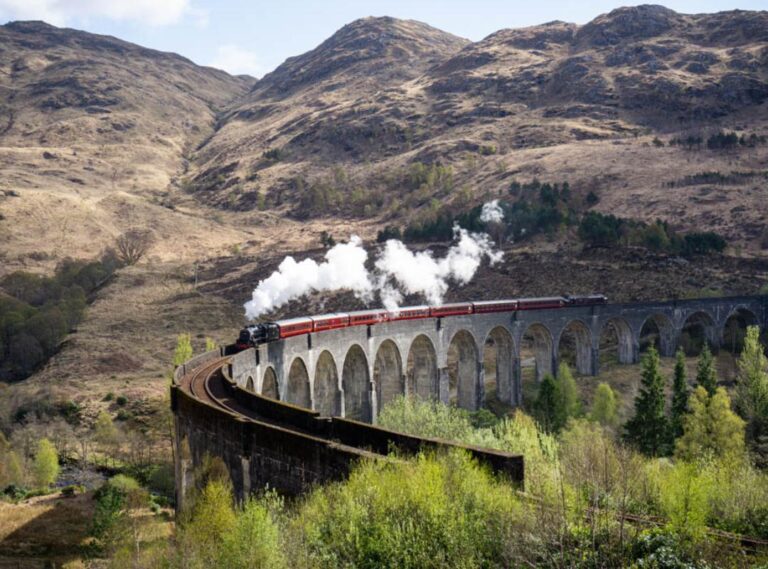
Glenfinnan is the biggest highlight of this journey. Just before you reach the station, you cross the Glenfinnan Viaduct, a 21-arch railway viaduct over the River Finnan at the top of Loch Shiel.
On the outbound journey from Fort William, you’ll want to look to your left for this. It’s such a cinematic moment. In the distance, you’ll see Glenfinnan Monument with the statue of the Lone Highlander at the top to remember those who lost their lives during the Jacobite Rebellion.
On the right, look out for Loch Eilt. Sharp-eyed fans might recognise the island where Dumbledore was buried. As the train gets closer to the west coast, you’re framed by sea lochs and mountains. Look left to catch a glimpse of the Small Isles of Eigg and Rùm in the distance.
On the left, along the coast, are the hypnotic Silver Sands of Morar, and to the right is Loch Morar, the deepest freshwater body in the British Isles. Careful not to hurt your neck with all the head turning! Finally, the train arrives at the fishing town of Mallaig at the end of the line.
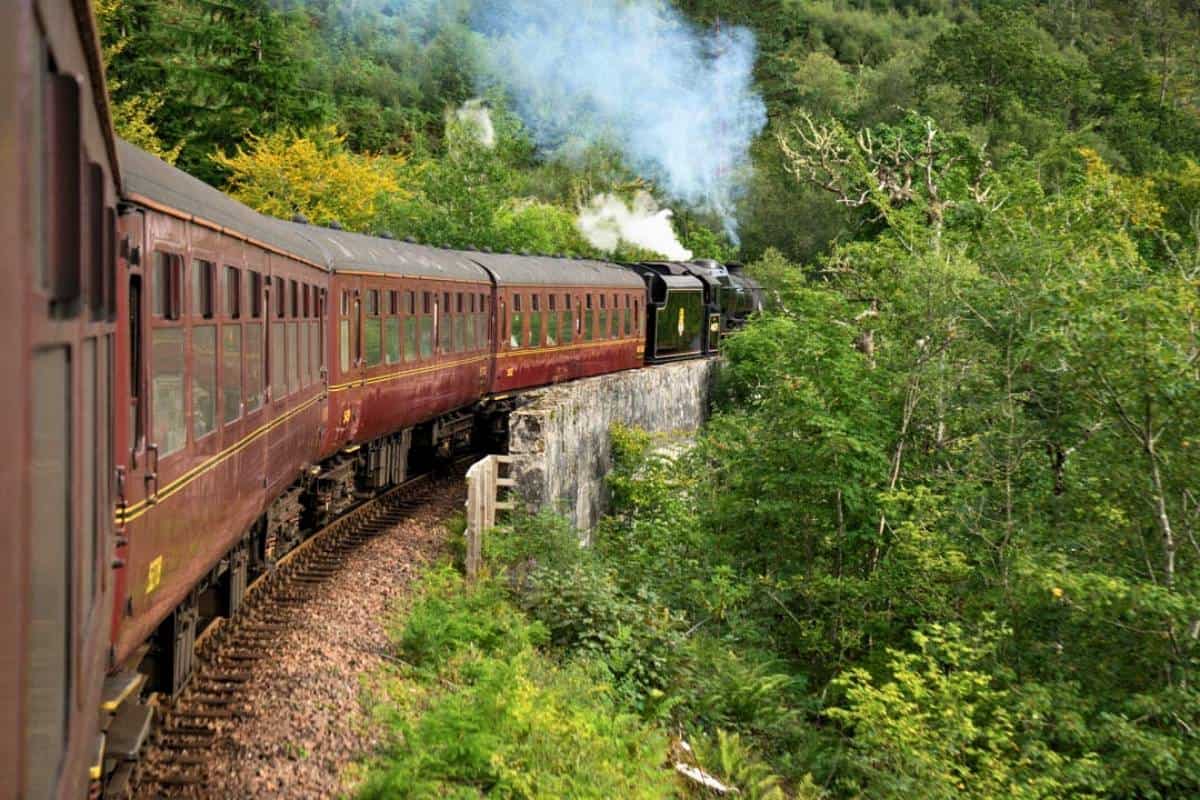
You can do this journey with ScotRail and West Coast Railways (the Jacobite). On ScotRail, you get all the same views for a much lower price. You can also get off at the stations, including Glenfinnan.
You need to book the Jacobite months in advance, and it’s a lot more expensive. Tickets are return journeys, and you can only get off at Fort William, Mallaig and Arisaig.
I’ve done both, and while I loved the Jacobite experience, the ScotRail wins for views because you can get off at Glenfinnan and see the steam train cross the viaduct. For that reason, it makes it one of the best scenic train journeys in Scotland I’ve ever done.
Departs/Finishes: Fort William → Mallaig
Length: 1 hr 24 mins
Look out for: Glenfinnan Viaduct, Loch Shiel, Loch Eilt, Silver Sands of Morar
Get off at:
– Glenfinnan (viaduct viewpoint & monument)
– Mallaig (ferry gateway to Skye & Small Isles)
3. Highland Main Line: Perth to Inverness
The Highland Main Line runs up through the Scottish Highlands and skims along the western edge of the Cairngorms National Park. It technically starts from Perth, but direct trains run all the way from Glasgow and Edinburgh.
The railway follows the A9 road all the way up, but it’s still one of the most scenic Highland train journeys in Scotland, and one of my favourite routes. I’ve done it a few times to reach Inverness.
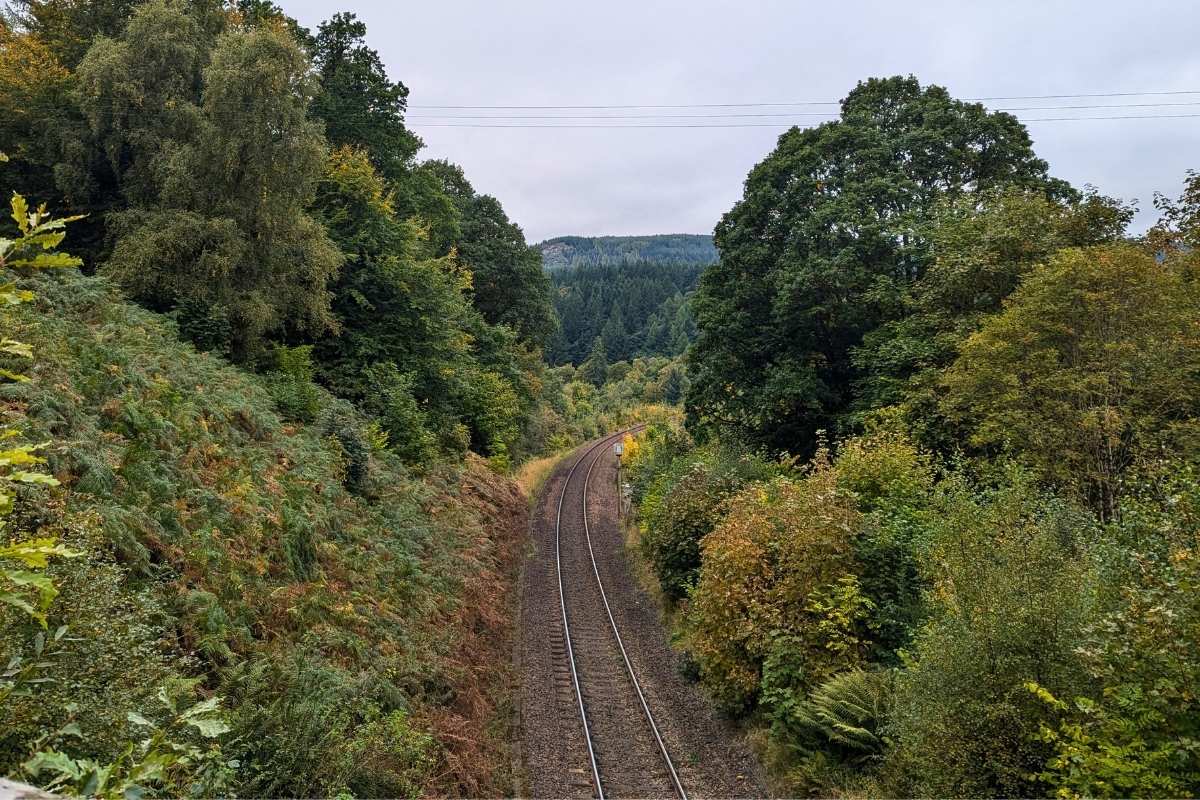
Travelling up through Highland Perthshire, you pass Tay Forest Park between Dunkeld and Pitlochry. This is Big Tree Country, home to some of the tallest trees in Britain. It’s particularly stunning in autumn when the leaves are turning.
Soon, forests are replaced by mountains as you travel deeper into the Cairngorms. Though you stick to the edge, you can still see peaks rising to your right in the distance.
Aviemore is the main town, and it’s an ideal place to get off if you want to explore the Highlands by public transport. Buses to Glenmore, Loch Morlich and Cairngorm Mountain depart from outside the station.
After Carrbridge, you leave the Cairngorms behind and wind north to Inverness. You’re absolutely spoiled with views as you cross Findhorn Bridge, Nairn Viaduct and Culloden before arriving in Inverness.
ScotRail serves this line, but you can also travel all the way up to Inverness from London on the Caledonian Sleeper. Prices start from £59 for a seat. I loved watching the dawn break over the Cairngorms.
Departs / Finishes: Perth → Inverness
Length: 2 hrs 4 mins
Look out for: Cairngorms National Park, River Tay, rolling Highland scenery
Get off at:
→ Dunkeld & Birnam (woodland walks, the Hermitage)
→ Pitlochry (Highland town, distilleries)
→ Blair Atholl (Blair Castle)
→ Aviemore (Cairngorms gateway, Loch Morlich)
4. Edinburgh to Aberdeen: Scotland’s East Coast
This railway line snakes up the east coast from Edinburgh to Aberdeen. It’s one of the most scenic train trips in Scotland, with glimpses of the North Sea for much of it.
The train departs Edinburgh and crosses the famous Forth Bridge over the Firth of Forth. This remarkable feat of engineering opened in 1890 and now serves 190-200 trains a day. In 2015, it became Scotland’s sixth UNESCO World Heritage Site.
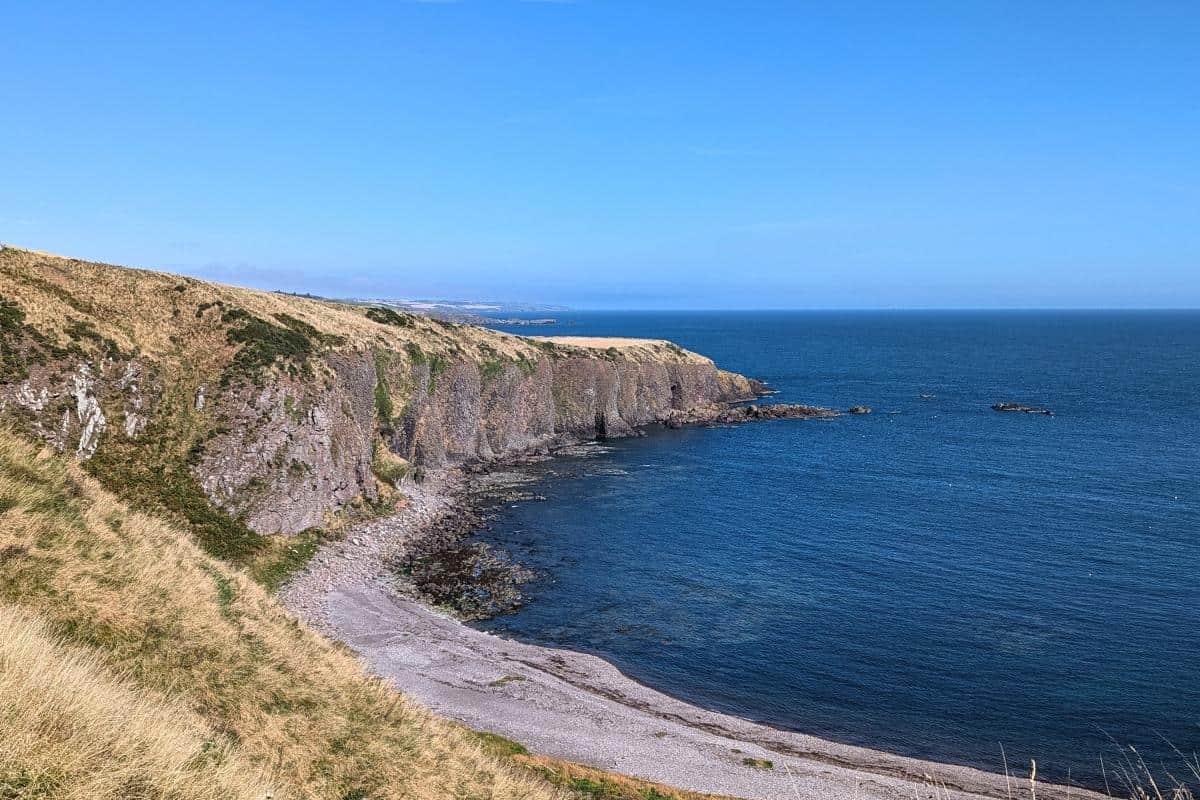
Travelling east, the train skims along the coast, sharing a short section with the Fife Coastal Path, a 117-mile walking trail joining the fishing villages along the Fife Peninsula. You don’t see them, though, as the railway turns inland to reach Cupar.
If you want to see more of Fife, jump off the train at Leuchars to catch a bus to St Andrews and another bus to Anstruther in East Neuk.
After Leuchars, you pass Dundee, Scotland’s sunniest city. You climb up the coast to Montrose, then traverse farmland to Stonehaven until you reach Aberdeen.
I did this journey as a day trip from Edinburgh to Stonehaven to see one of Scotland’s most iconic castle ruins, Dunnottar. I was spoiled with gorgeous early morning fog on the Firth of Forth and glorious sunshine along the North Sea coast.
Departs / Finishes: Edinburgh → Aberdeen
Length: 2 hrs 22 mins
Look out for: Forth Bridge, North Sea coastline, fishing villages
Get off at:
→ Leuchars (St Andrews, Fife fishing villages)
→ Dundee (Scotland’s sunniest city)
→ Stonehaven (Dunnottar Castle)
Join My Free Scotland Travel Community!
Want more insider tips on exploring Scotland without a car? Click here to join my free private Facebook group: Scotland Travel Tips & Planning, with over 6,100 like-minded members.
5. Kyle Line: Inverness to Kyle of Lochalsh
One of the best train journeys in Scotland, the Kyle Line is an adventure to the west coast through the Highlands. This is the train to take if you want to reach the Isle of Skye from Inverness. It ends at Kyle of Lochalsh, where you can catch a bus over the Skye Bridge to the island.
Before that, you’re treated to two and a half hours of remote Highland views that will have your eyes glued to the window. From Inverness, you first trace the coast of the Beauly Firth before heading north to Dingwall with the Cromarty Firth in the distance. Look out for the lone peak of Ben Wyvis in the north.
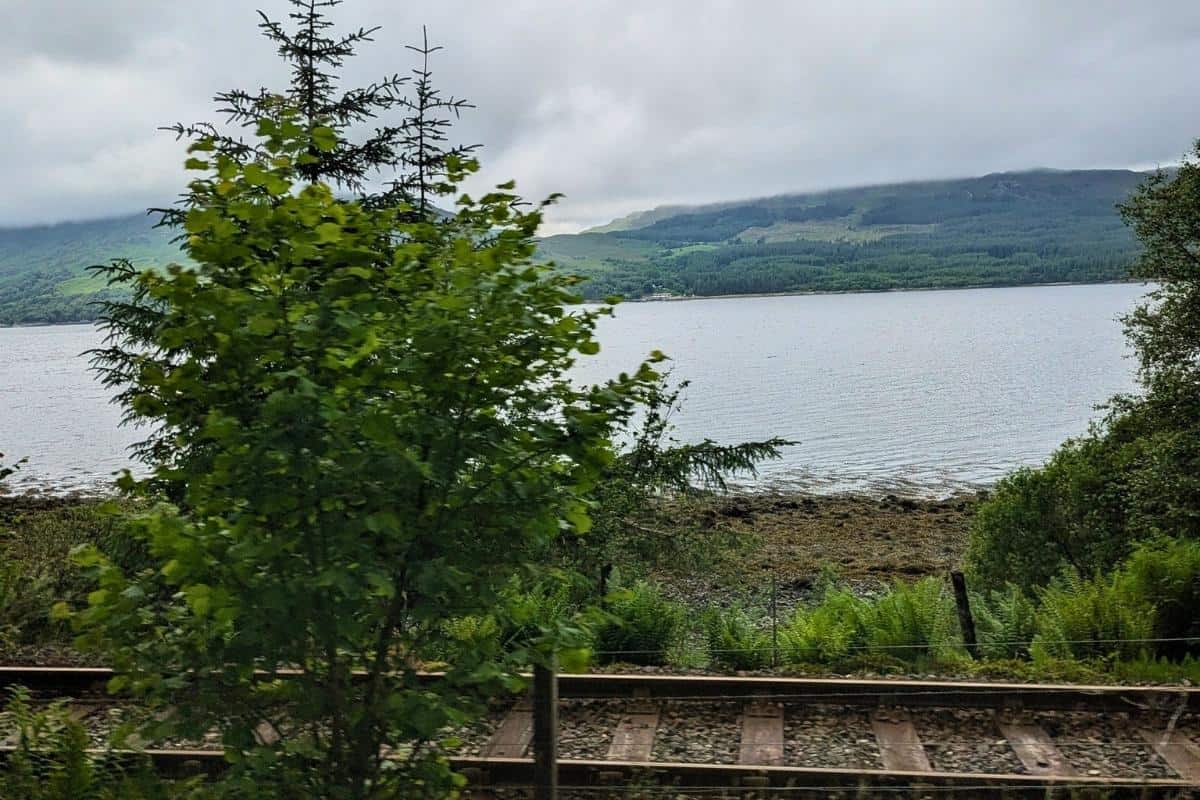
Now, you turn west, and the landscape becomes more mountainous, dotted with lochs and rivers as you enter the North West Highland region called Wester Ross (very Game of Thrones!).
From Loch Luichart, you can start to see the rugged Torridon Peaks getting closer on the right. Veering south to the coast, the landscape opens out as you follow the edge of Loch Carron. Directly in front are the Isles of Skye, Raasay and Scalpay across the Inner Sound.
Before reaching Kyle of Lochalsh, it’s worth getting off at Plockton. One of the most beautiful villages in the Highlands to reach by train, it sits in a sheltered bay with panoramic views of Applecross and Skye across Loch Carron.
Departs / Finishes: Inverness → Kyle of Lochalsh
Length: 2 hrs 39 mins
Look out for: Loch Carron, the mountains of Wester Ross, Skye Bridge
Get off at:
→ Plockton (pretty coastal village, palm trees!)
→ Kyle of Lochalsh (bus across to the Isle of Skye)
6. Far North Line: The Northernmost Railway
The Far North Line is the northernmost railway line in the UK, linking Inverness with Thurso on the north coast. One of the most scenic train journeys in Scotland, it starts the same way as the Kyle Line but continues north at Dingwall along the Cromarty Firth.
Look out for Foulis Castle before reaching the town of Invergordon. This area has quite a few whisky distilleries, including Teaninich in Dalmore, Whyte & Mackay’s in Invergordon and Glenmorangie in Tain.
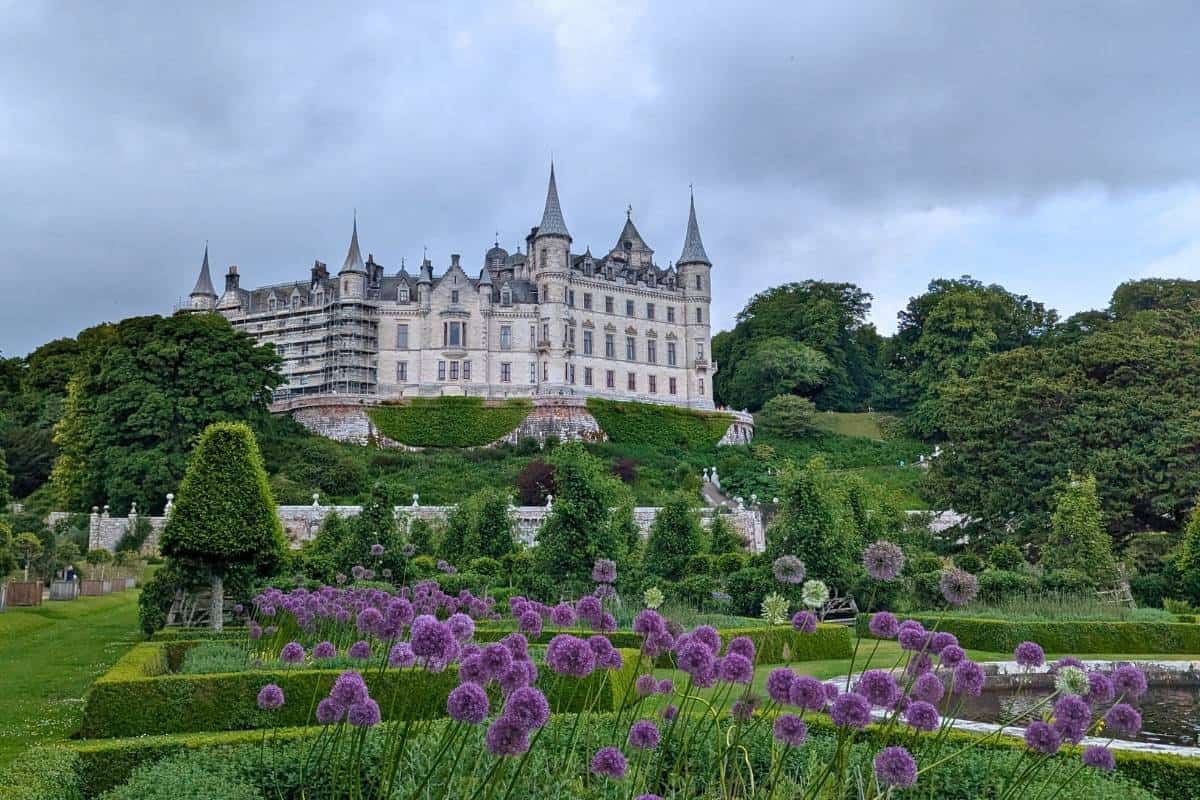
Pushing into Sutherland, it skirts inland and loops back to the coast at Dunrobin Castle. This French Chateau-style castle looks like it belongs in a fairytale, but its origins are anything but.
It was the former home of the Duke of Sutherland, who was largely responsible for the Highland Clearances in the North Highlands during the 18th and 19th centuries. Families were forced out of their homes to make way for sheep farming.
The railway leaves the coast once more and weaves through a vast peat bog known as the Flow Country. It stretches 4,000 km² across Caithness and Sutherland, making it the largest and most important blanket bog in Europe.
This UNESCO-listed peatland sequesters around 400 million tonnes of carbon, which is more than all of the UK’s forests and woodlands combined. Get off the train at Forsinard to visit the RSPB visitor centre and explore this globally important landscape.
Soon, the train arrives at Thurso on the north coast. From here, catch a ferry to Orkney from Scrabster or visit Dunnet Head, the most northerly point of the British mainland. You can also stay on the train as it doubles back to reach Wick on the north east coast.
Departs / Finishes: Inverness → Thurso & Wick
Length: 3 hrs 43 mins – 4 hrs 15 mins
Look out for: Moray Firth, wild moorland, dramatic north coast landscapes
Get off at:
→ Dunrobin Castle (fairytale castle by the sea)
→ Forsinard (Flow Country nature reserve)
→ Thurso (ferry to Orkney)
PLAN YOUR TRIP THE RIGHT WAY!
Skip the overwhelm and let me help. With my bespoke trip planning service, I can design a car-free Scotland itinerary for you that’s practical, stress-free and perfectly suited to your needs.
7. Borders Railway: Edinburgh to the Scottish Borders
The Borders Railway is the shortest scenic train journey on this list. Departing from Edinburgh, it’s a short journey south to Tweedbank in the Scottish Borders. It’s an often-overlooked part of Scotland, but well worth a day trip from Edinburgh or a longer stay.
As you leave the capital city behind, keep a lookout for the Pentland Hills rising on the right. After passing Newtongrange and Gorebridge, the landscape unfolds into open pastures and tree-dotted hills. This is the most scenic part of the journey, and it looks best in the early morning or early evening sunlight.
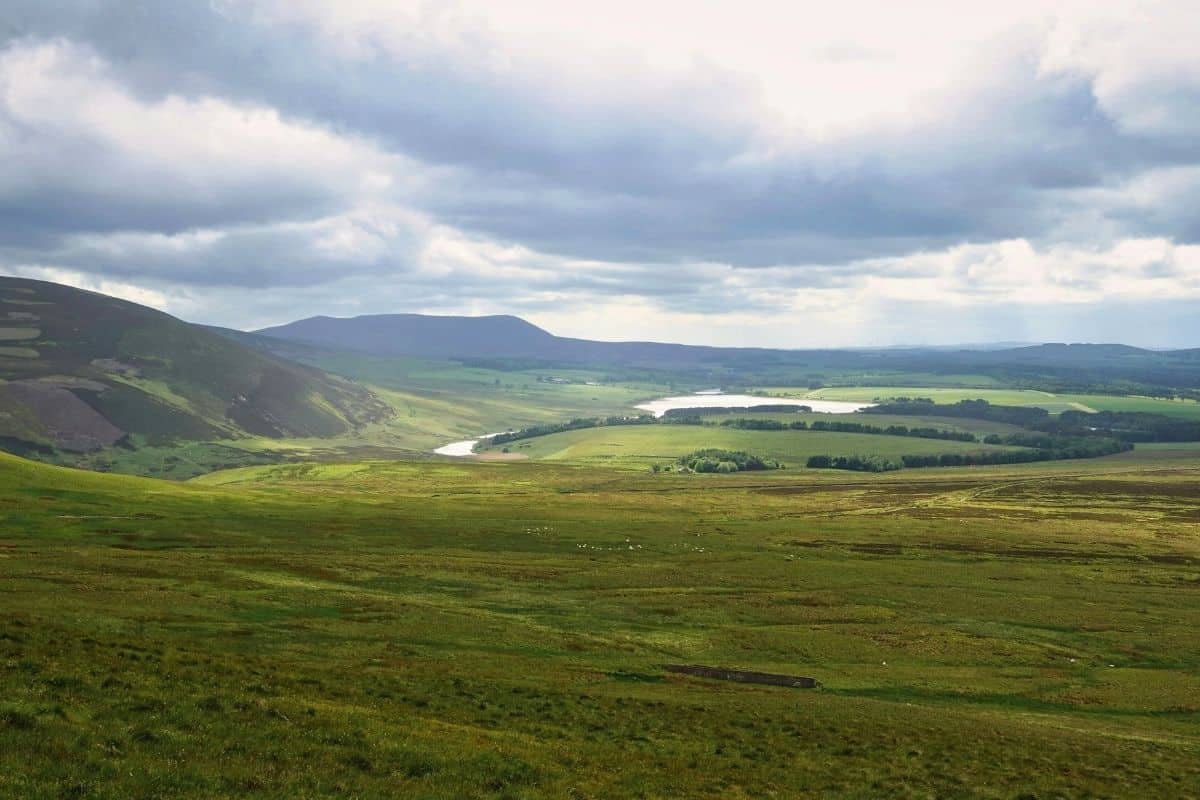
After Stow, look out for the ruins of Bow Castle, an Iron Age broch on the hilltop to the left. It’s marked by a modern cairn, which is quite hard to see. It’s believed to have been destroyed by the Romans during their occupation of southern Scotland.
Soon, the train reaches Galashiels, the largest town in the Scottish Borders. Located on the Gala Water, it was the commercial centre of the woollen textile trade in the 20th century. It’s then a few more minutes to Tweedbank on the River Tweed.
From Tweedbank, you can catch a bus to Abbotsford House, the home of Sir Walter Scott. Visit the ruined Jedburgh and Melrose abbeys or catch a bus to Hawick to shop for cashmere and tweed at Lovat Mill and Johnstons of Elgin. It’s a lovely little town to visit without a car.
Departs / Finishes: Edinburgh → Tweedbank
Length: 1 hr 3 mins
Look out for: Rolling Borders countryside, Moorfoot Hills, Tweed Valley
Get off at:
→ Galashiels (shopping & local history)
→ Tweedbank (for Melrose Abbey & Abbotsford House)
Final thoughts on the most scenic train journeys in Scotland
Scotland’s scenic railway journeys take you all over the country, from the peat bogs of the North Highlands to the rolling hills of the Scottish Borders.
If you’re looking for an epic journey with jaw-dropping scenery, the West Highland Line doesn’t disappoint. The section from Fort William to Mallaig is the most scenic, with Glenfinnan Viaduct, Loch Eilt and the west coast.
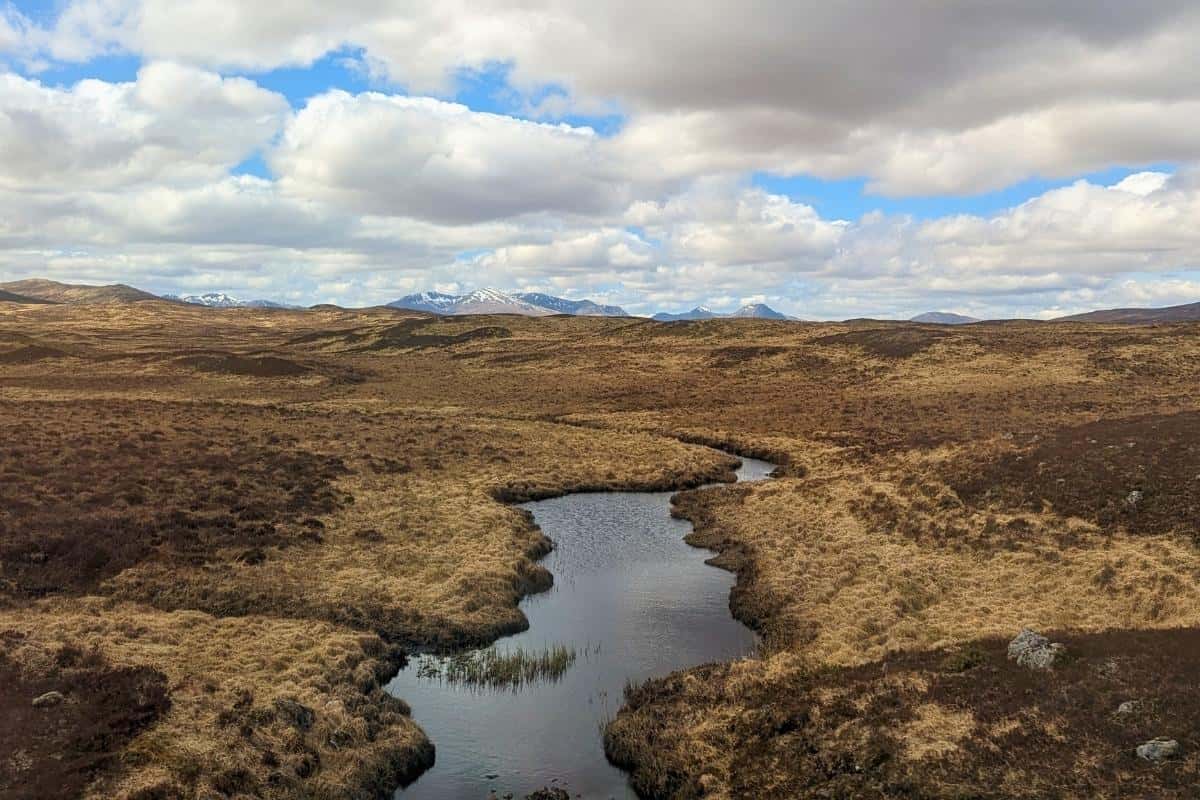
For endless mountains and remote lochs, the Kyle Line is a must-do. Stay a while in Plockton to feel like you’re on the edge of the earth. And if you’re craving expansive views, traverse Flow Country by train up to the Far North.
When exploring Scotland by train, always use Traveline Scotland. The journey planner is a lot more accurate than Google Maps. And remember to book your ticket in advance on Trainline, so you can sit back and enjoy the view as you ride these scenic train journeys in Scotland.
Wondering about the best train journeys TO Scotland? Read my review of the trains from London to Edinburgh next.
Want a Scotland trip without the hassle of planning? I’ll design a custom itinerary that takes care of the details, so you can simply relax and soak up the adventure. Click here to find out more!